Requisition Portal closed December 11, 2026, through January 31, 2027

Current calls
- 16 Nov
- 16 Nov
- 16 Nov
- 20 Dec


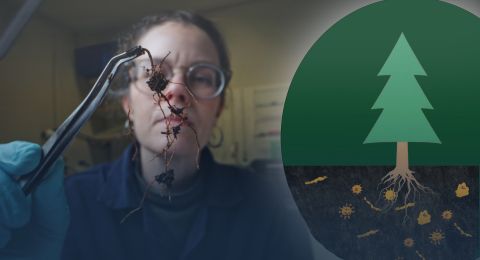
Researching to save ecosystems
Wallenberg Scholar David Wardle wants to understand how plants and animals above ground, and small organisms such as fungi, bacteria and animals below the soil surface, interact – and how that interaction is changed by human activities such as climate change, land use, and extirpation and invasion of species.

Tracing the genetic history of modern humans
Wallenberg Scholar Mattias Jakobsson is mapping the early evolutionary trajectories of our species, and is now rethinking the conceptual model of what distinguishes modern humans from other human groups.

A levitating microparticle for challenging the laws of quantum physics
Wallenberg Scholar Witlef Wieczorek is trying to be the first to bring the microscopic quantum world closer to our everyday world. The research challenges the laws of quantum physics and may have implications ranging from the search for dark matter to faster detection of earthquakes.

Increasing our mathematical understanding
Wallenberg Scholar Kurt Johansson has embarked on a new path in his mathematical research. But he continues to be driven by a desire to improve our understanding of why random patterns constantly occur in the world around us.