
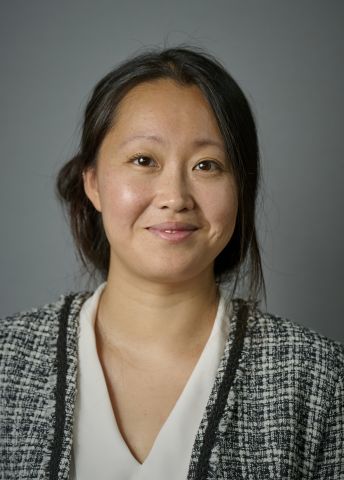
Wallenberg Academy Fellow 2025
Medicine
Dr Amanda Andersson Rolf
The Hubrecht Institute, Utrecht, Netherlands
Nominated by Karolinska Institutet
Medicine
Dr Amanda Andersson Rolf
The Hubrecht Institute, Utrecht, Netherlands
Nominated by Karolinska Institutet
Can pancreatic tissue be regenerated?
Currently, if inflammation or a cancer treatment damages the adult pancreas, the injury cannot be repaired. As a Wallenberg Academy Fellow will Amanda Andersson Rolf map how the pancreas forms during the fetal stage, a stage where the pancreas is able to regenerate. The aim is to find methods that will stimulate the cells to regenerate healthy tissue in a damaged pancreas.
Every organ in our body is made from many types of cells that interact with each other. To understand how an organ is formed, we must study how stem cells present in the immature developing organ create that organ’s specific cell types. This has been challenging, but researchers have recently acquired advanced methods that allow them to study single cells in complex tissue.
Dr Amanda Andersson Rolf from the Hubrecht Institute, Utrecht, Netherlands, will use these methods to better understand how immature stem cells create the pancreas during the fetal stage. She has already succeeded in creating a three-dimensional cell model – an organoid – of the pancreas, where the organ’s main cells are formed. She will now use these organoids (also known as mini organs) to map how pancreatic stem cells are regulated and which factors trigger their maturation into more specialized cells.
Andersson Rolf, who will work at Karolinska Institutet, will also develop a cell model of an adult human pancreas, better mimicking the organ’s complexity. The aim is to understand how existing adult cells can revert to a state more like that of the stem cells present in development. These cells could then heal an injury of the adult pancreas.
Photo: Patrik Lundin