
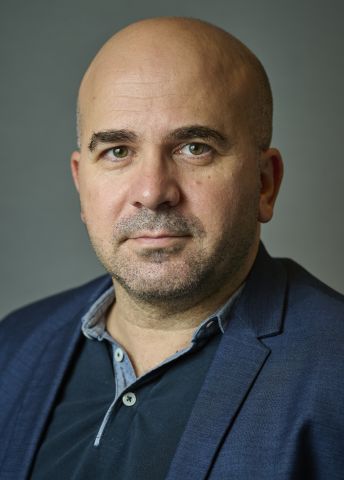
Wallenberg Academy Fellow 2025
Natural Sciences
Dr Haim Treves
Rheinland-Pfälzische Technische Universität, Germany
Nominated by Uppsala University
Natural Sciences
Dr Haim Treves
Rheinland-Pfälzische Technische Universität, Germany
Nominated by Uppsala University
More efficient photosynthesis could provide more food for the world
Food production must increase dramatically if we are to feed all of humanity in the future. One way to increase yields could be to make photosynthesis more efficient. Wallenberg Academy Fellow Haim Treves will look for bottlenecks during photosynthesis, to understand how crops can be modified so they grow faster.
According to UN projections, food production needs to increase by over 50 percent by 2050, but planetary resources are already under pressure. If we try to increase yields by cultivating more land, we risk losing biodiversity and intensifying climate change. Researchers are thus looking for new ways to increase yields from land that is already being used for agriculture.
One potential solution could be to speed up photosynthesis, the process by which algae and plants convert carbon dioxide and water into simple sugars using energy from sunlight. According to researchers’ theoretical calculations, photosynthesis could become much more efficient, which would increase crop growth rates.
Dr Haim Treves at the Rheinland-Pfälzische Technische Universität, Germany, has developed a unique set of tools that allow the metabolism of photosynthesizing organisms to be mapped. He will now use these tools to identify genes and proteins that limit photosynthesis. The aim is to understand how crops could be modified to make them drive photosynthesis more efficiently.
As a Wallenberg Academy Fellow, Haim Treves will work at Uppsala University.
Photo: Patrik Lundin