About one million insect species are currently known to science – but the true number may be ten times higher. Fredrik Ronquist is heading a project in which genetic methods and AI are being used to map insect diversity.
Project grant 2024
DarkTree: Charting the dark regions of the insect tree using computer vision, genomics and probabilistic machine learning
Principal investigator:
Fredrik Ronquist, Professor of Entomology
Co-investigators:
Swedish Museum of Natural History
Tom van der Valk
KTH Royal Institute of Technology
David Broman
Linköping University
Michael Felsberg
Grant:
SEK 24 million over five years
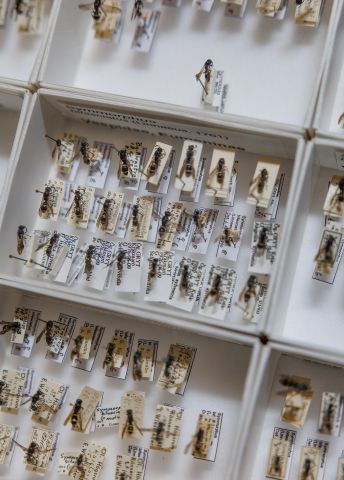
Our world may be home to ten times more insect species than we previously thought. Under the DarkTree web project, Ronquist is leading several research groups across Sweden whose task is to map insects unknown to science.
“Most of the undiscovered and undescribed species are small and inconspicuous. They are difficult to detect using traditional methods involving magnifying glasses and microscopes to distinguish different species. Now we are using AI and genetic engineering to speed things up,” he says.
The project will also lead to the mapping of more insect genomes. Of the one million insect species described so far, only a small fraction has had their genomes sequenced.
Completing the family tree
The first insect genome to be sequenced was that of the fruit fly – as long ago as 2000. Other insects soon followed, including the malaria mosquito, the silkworm moth and the honeybee. Our knowledge is still limited to individual species and groups, however. The DarkTree project aims to greatly expand the insect family tree.
“Our goal is to fill in the knowledge gaps that are most valuable for creating a more accurate family tree for insects. We therefore make a representative selection of species to sequence from the huge amount of material at our disposal.”
The project includes insect samples from several large-scale surveys, primarily the Insect Biome Atlas, in which researchers have mapped insects in Sweden and Madagascar. Additionally, there is the global Lifeplan project, which has collected insects at some 20 locations worldwide. All in all, there are around 35,000 samples, each containing up to tens of thousands of insects.
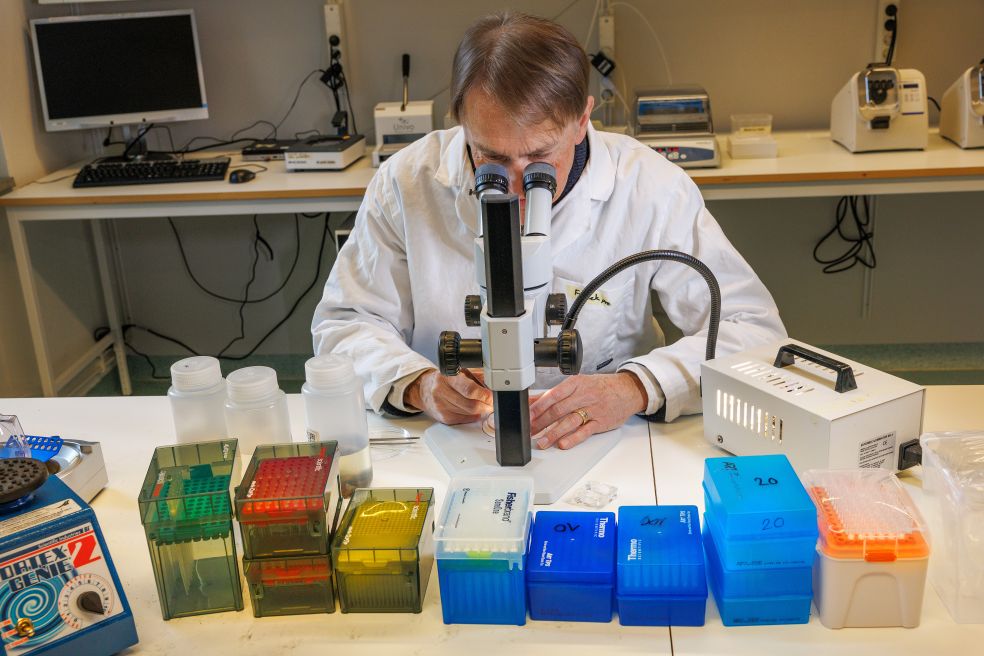
The technique the researchers are using to map insects is called “metabarcoding.” Simply put, samples containing thousands of insects are soaked in a solution that releases DNA from the mitochondria in the cells. The solution is then purified and screened for a specific gene sequence – a kind of barcode.
The gene sequence the researchers are looking for is called CO1 and has been shown to vary between insect species. This variation enables them to identify which species are present in a sample and also which are completely new to science.
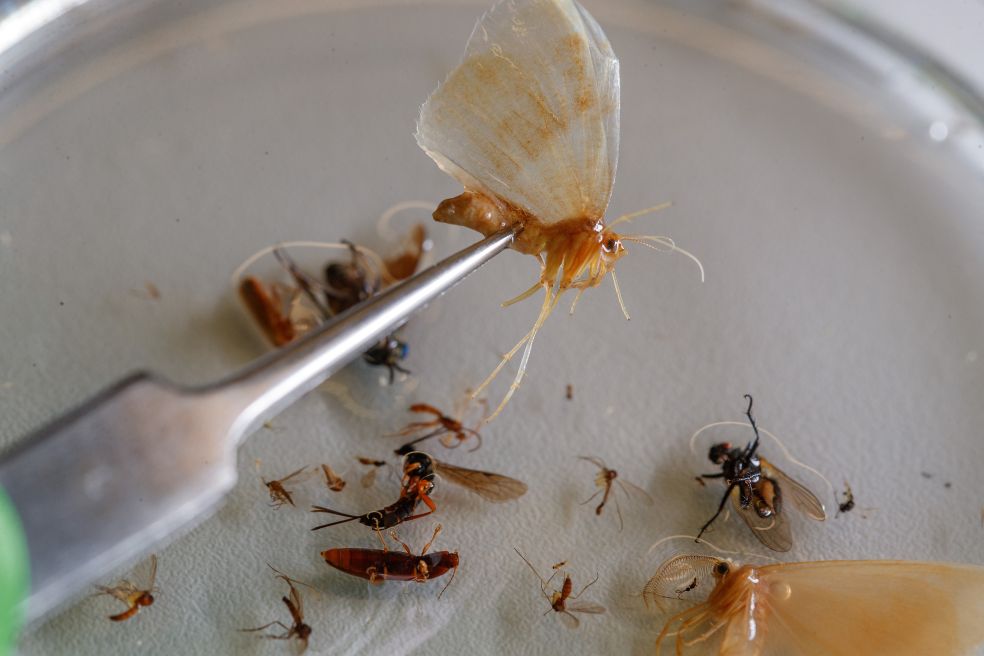
However, far from all new discoveries have their genomes sequenced; the technique is still too expensive. If selected carefully, however, the insects that are sequenced can contribute to a better picture of insect evolution.
“We know certain points in the family tree very well, but the regions in between are completely unknown. Working systematically, we can illuminate even the dark regions, giving us a much more complete picture of insect evolution.”
So far, the researchers have mainly studied herbivorous insects because they have been easier to find and examine. The new technique enables the team to include the many decomposer insects and parasites that play a key role in our ecosystems.
Technology increasing the pace
The last time the Swedish insect fauna was surveyed on a large scale was in 2003–2006. At that time, researchers collected around 20 million insects. It took 15 years of manual work to catalog the finds. Approximately 2,000 new species were identified as new finds for Sweden. Some of them were also completely new to science.
“Modern technology enables us to identify as many insects as we collected in the previous survey in just a few weeks. These advances have speeded up our work enormously.”
The technology also opens up new ways of monitoring insect populations to see how they are affected by factors such as climate change. Monitoring programs of various kinds are already under way in several European countries.
“We are participating in a European joint project to standardize the technology so that good comparisons can be made between countries.”
According to a widely reported study in German nature reserves, the number of flying insects has declined dramatically – by about 70 percent over the past 30 years.
“That is clearly alarming, albeit that we still have very little reliable data and cannot say for certain what changes have occurred or how they affect our ecosystems. Above all, we know nothing about the role played by insects we have not even discovered yet.”
Linnaeus as a robot
When we visit Ronquist at the Swedish Museum of Natural History, the researchers have gathered for a project meeting. On our way through the large museum halls, we pass an early-morning school class from the Stockholm suburb of Huddinge being guided around the interactive exhibitions by their teachers. The researchers’ animated discussions take place against a backdrop of children’s laughter.
New technology gives children entirely new ways of accessing the museum’s rich collections. Meanwhile, the researchers are using these advances to develop new methods of combining genetic data with insect appearance. The project combines computer vision and machine learning to develop methods that can automatically distinguish insects from each other. A colleague of Ronquist calls the technology a “Linnaeus robot.”
“It means we can overcome the limitations of traditional taxonomy, which is very time-consuming and requires a high level of expertise. And the technological transition gives us the boost we need to attract new generations of talent,” says Ronquist.
Text Magnus Trogen Pahlén
Translation Maxwell Arding
Photo Magnus Bergström