
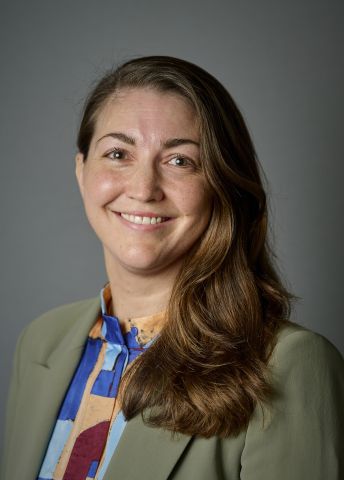
Wallenberg Academy Fellow 2025
Medicine
Dr Camilla Engblom
Karolinska Institutet
Medicine
Dr Camilla Engblom
Karolinska Institutet
How are antibody-making cells controlled?
Wallenberg Academy Fellow Camilla Engblom has developed a technology in which the body’s B cells – which produce antibodies – can be studied in detail. She will now use this tool to learn more about these cells. The goal is to generate ideas that can be used to design treatments for cancer and inflammatory bowel diseases.
When our body is invaded by a virus, for example, our B cells produce antibodies that stick to the virus’s surface. The antibodies function like tags, signaling to other immune cells that they should destroy the virus. These antibodies can also prevent the virus from infecting the body’s cells.
B cells are thus vital to the body’s immune system, but researchers lack fundamental knowledge regarding how they are controlled and activated, especially in tissues. Dr Camilla Engblom, Karolinska Institutet, has developed a method that allows B cells and their unique antibody sequences to be studied in their natural environment. She will now use it to better understand how specific B cells and their antibody production are switched on and off inside the body’s tissues.
Using the knowledge she gains, Engblom hopes to find ways to control the B cells’ activities. For example, if B cells that produce antibodies against a tumor could be activated, this could trigger the immune system into attacking the tumor. In inflammatory bowel diseases, where the immune system is overactive, the ability to switch off B cells’ antibody production could instead be beneficial.
Photo: Patrik Lundin