
Program for mathematics 2026
Visiting Professor
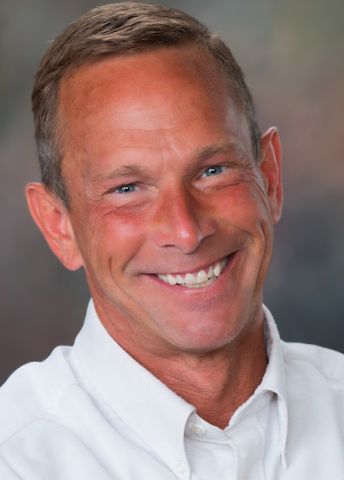
Professor Hal Schenck
Auburn University, Alabama, USA
Nominated by:
KTH Royal Institute of Technology, Stockholm
Visiting Professor
Professor Hal Schenck
Auburn University, Alabama, USA
Nominated by:
KTH Royal Institute of Technology, Stockholm
Algebraic geometry as a universal tool
Hal Schenck is professor and R.K. Brown Eminent Scholars Chair at Auburn University, Alabama, USA. Thanks to a grant from the Knut and Alice Wallenberg Foundation, he will be a visiting professor at the Department of Mathematics, KTH Royal Institute of Technology, Stockholm.
Schenck is an internationally renowned researcher in algebraic geometry, well-known for his ability to combine conceptual depth with concrete calculational techniques. The development of advanced calculational methods has meant that previously purely theoretical questions in various disciplines, such as physics, biology and computer science, can increasingly be addressed using modern algebraic and geometric methods.
The planned research programme will use new methods from algebraic geometry to explore four distinct themes:
- Geometry and physics: Geometric structures (toric spaces and Calabi–Yau varieties) central to describe the building blocks of the universe using the string theory of theoretical physics will be explored.
- Dynamical systems: Algebraic methods will be used to study oscillator networks – models that describe various phenomena such as fireflies flashing in unison, the interaction of nerve cells in the brain, or maintaining stability in electricity grids.
- Data analysis: As data sets increase in size and complexity, new tools are necessary to identify structures in seemingly chaotic information. The project will develop algebraic methods for data analysis, searching for patterns that would otherwise be impossible to find.
- Algebraic questions: This theme will examine questions around the multidimensional structure known as exterior algebra, which has deep connections to both geometry and physics.
The research team will use a blend of techniques from computation and experiment to expand the theoretical understanding of phenomena from the natural world. They aim to better understand problems from network dynamics and physics, and to use mathematical techniques to extract meaning from massive data sets.
Photo: Jeffrey Etheridge