
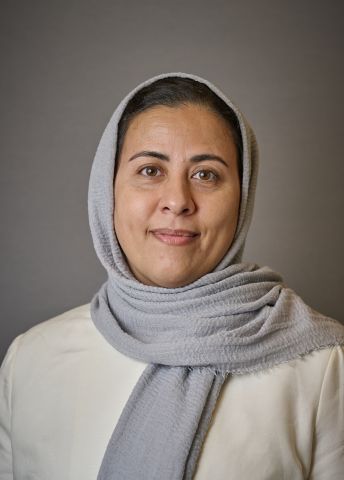
Wallenberg Academy Fellow 2025
Natural Sciences
Dr Maliheh Mehrshad
Swedish University of Agricultural Sciences
Natural Sciences
Dr Maliheh Mehrshad
Swedish University of Agricultural Sciences
Can natural viruses prevent the spread of antibiotic resistance?
Wherever there are bacteria, there are also viruses that infect and kill them. Wallenberg Academy Fellow Maliheh Mehrshad will conduct detailed studies of a specific type of natural bacterial viruses, to better understand how they work. The hope is that these viruses can be utilized to prevent the spread of antibiotic resistance.
Increasing antibiotic resistance is one of the greatest threats to human health. Genes that convey resistance can spread through lakes, rivers and sewage treatment plants, among other places. When bacteria encounter each other, they connect using small hair-like structures called pili. These pili are then used to exchange small rings of DNA (plasmids) that may include unwanted resistance genes.
A certain type of bacterial viruses, plasmid-dependent phages, utilize the bacteria’s pili as a target to infect them. Dr Maliheh Mehrshad at the Swedish University of Agricultural Sciences, Uppsala, believes that these phages can become an important tool in the fight against antibiotic resistance. Researchers currently have limited knowledge about them, but Mehrshad has developed advanced methods that make it possible to capture them in their natural environment and then study them in the lab.
She will now use these methods to map the presence of plasmid-dependent phages in lakes and wastewater. The aim is to understand how they interact with bacteria and how they influence the spread of antibiotic resistance.
Photo: Patrik Lundin