
Program for mathematics 2026
Grant to a post-doctoral position abroad
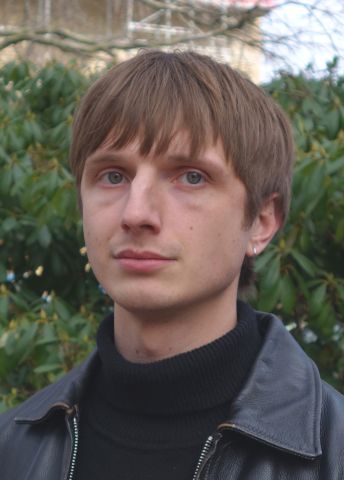
Doctoral student Douglas Molin
University of Gothenburg
Postdoc at Oxford University, UK
Grant to a post-doctoral position abroad
Doctoral student Douglas Molin
University of Gothenburg
Postdoc at Oxford University, UK
New contributions to the Langlands program
Douglas Molin will receive his doctoral degree in mathematics from Chalmers University of Technology and the University of Gothenburg in 2026. Thanks to a grant from the Knut and Alice Wallenberg Foundation, he will hold a postdoctoral position with Professor James Newton at Oxford University, United Kingdom.
The planned research is part of one of the most comprehensive and influential projects in mathematics. It originates in a letter from 1967, in which Canadian mathematician Robert Langlands formulated a web of profound and far-reaching conjectures, which linked apparently disparate areas of mathematics, such as algebra, geometry, harmonic analysis and number theory. Ever since, it has been known as the Langlands program.
One decisive breakthrough in the Langlands program arrived with the proof of a famous conjecture from the 17th century, which was formulated by the French mathematician Pierre de Fermat. He claimed that the equation xn+yn=zn, has no positive integer solutions for n greater than 2, but did not provide any proof. Over 350 years passed until Andrew Wiles, with vital help from his former doctoral student Richard Taylor, succeeded in proving Fermat’s theorem. This built upon a deep link between elliptic curves in algebraic geometry and modular forms in complex analysis – two objects whose symmetries play an important role in the proof.
One natural continuation is to attempt to unite these two types of symmetries for more general objects in geometry and analysis. On one hand, arithmetic symmetries are studied through Galois representations, algebraic structures that are named after the 19th-century French mathematician Évariste Galois; on the other, modular forms are generalised to automorphic forms – analytical functions with intricate, almost kaleidoscopic symmetry properties.
Many mathematicians have worked on these generalisations of Wiles’ results. The research in the planned project deals with more intricate generalisations, where methods from homotopy theory have proved to be useful. In the spirit of the Langlands program, the aim is to establish new connections in situations that are far beyond the classical link between elliptic curves and modular forms.
Photo: Setta Aspström