Each year, the world’s pulp and paper industry burns around 70 million tons of a by-product – lignin. Wallenberg Academy Fellow Mika Sipponen wants to put lignin to better use: as a base for new living materials. Microorganisms in them can help to purify water and capture carbon dioxide.
Mika Sipponen
Associate Professor of Materials Chemistry
Wallenberg Academy Fellow 2023
Institution:
Stockholm University
Research field:
Developing lignin-based functional materials for sustainable energy and environmental applications
When Sipponen was a doctoral student at Aalto University in Finland, he worked on developing new methods of separating lignin from biomass. The aim was to lay the foundation for more sustainable development of biofuels. But he could not let go of the idea that lignin could be used in some way.
“For me the holy grail was to find an application where lignin could be used as a raw material. That’s why I started experimenting,” he says.
Complex molecule
Lignin is a highly complex molecule found in the cell walls of trees and plants, giving them structural strength. At present, lignin is a by-product in the wood and pulp industry and is mainly used as fuel to provide energy for pulp mills. But the molecule has several properties that offer potential for new applications – and it is completely biodegradable. The rigid lignin can absorb ultraviolet light, has antioxidant properties and is biocompatible with many microorganisms.
These properties make lignin perfect as a basis for “living hybrid materials,” which combine living microorganisms with polymers to form a new type of material with properties from both the organisms and the polymer structure.
“Most current living hybrid materials are based on synthetic polymers that are not biodegradable and are developed using fossil resources. Lignin, by contrast, is extracted from biomass and is itself biodegradable, making it a better base from the outset.”
The microorganisms in the material have the potential to drive a range of chemical processes, such as breaking down various pollutants, but also capturing carbon dioxide or producing energy.
Fungi thriving on lignin
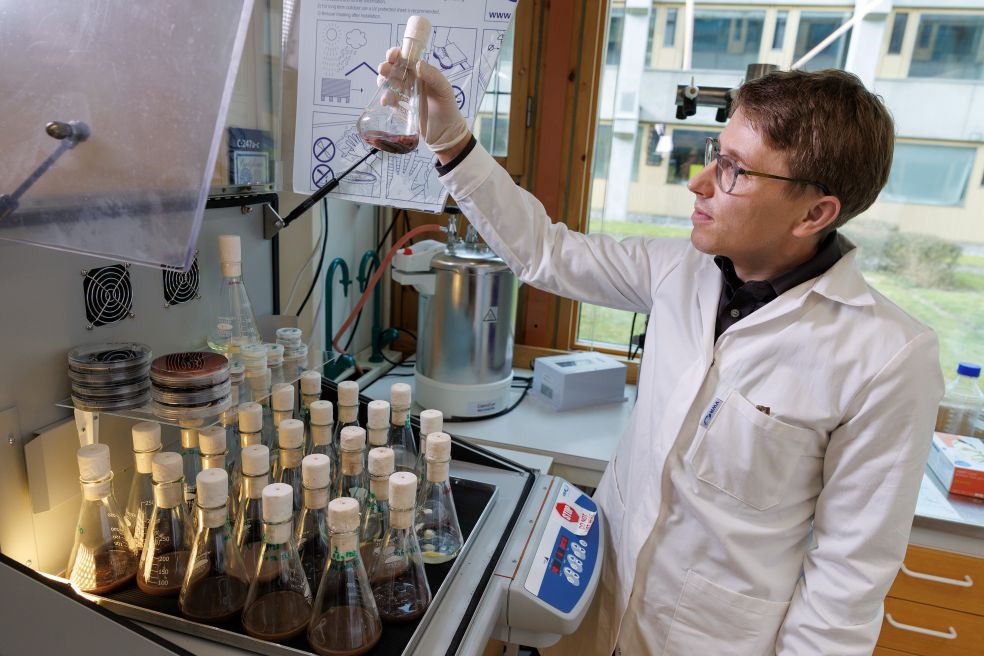
Not all microorganisms thrive on lignin. The researchers have therefore test-cultivated a range of microorganisms to see whether lignin inhibits or enhances their growth.
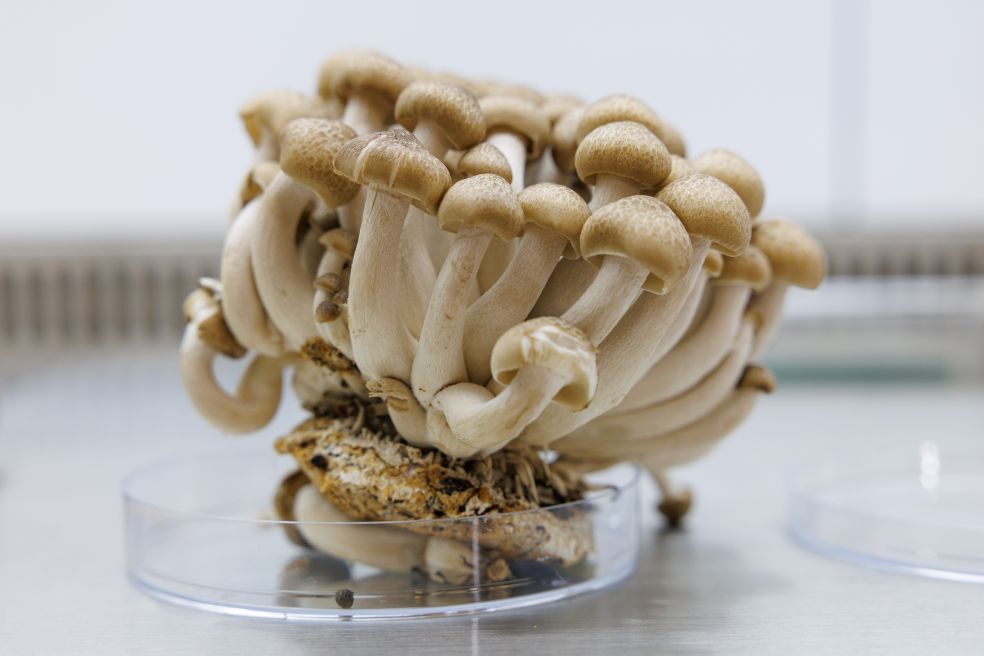
Sipponen’s research team has focused on a particular type of fungi that grows as long, thin filaments. The fungi resemble the hairy surface that forms when bread or fruit is attacked by mold. The fungi are allowed to grow completely surrounded by lignin, causing materials with new properties to be formed.
“The fungus we use in our experiments has been shown to grow better and faster in contact with lignin, but we still don’t know why.”
The hybrid material combining lignin and fungi has several new capabilities. One is that it can be used to separate water and oil, which could be useful in the event of an oil spill, for instance.
For us, the primary goal is to put sustainability first in our research. We avoid both hazardous chemicals and modifications that prevent lignin from being naturally biodegradable.
Hair conditioner and sunscreen
The inherent properties of lignin also offer potential applications. Its ability to absorb light, together with its antioxidant properties, could pave the way for new sunscreens. And since lignin is a surface-active molecule, it could potentially replace other fossil-based surfactants. One example is the many surfactants found in ordinary hair conditioners.
“We have carried out several side projects to demonstrate the potential of lignin as a stabilizer in mixtures of natural oil and water. One project that worked very well showed that it is possible to reduce the number of ingredients in hair conditioner using a completely environmentally friendly raw material like lignin,” says Sipponen.
The experiment attracted considerable international attention when it was published in Science Advances.
The idea of using lignin in hair conditioner came to Sipponen after a swim in a humus-rich forest lake in Finland. Bathing in the soft lake water had the same effect as using a conditioner.
“The experiment itself was carried out by one of my doctoral students – I am fortunate to have a research team willing to test my crazy ideas.”
The next step could be to further exploit lignin’s surfactant properties and produce a product that is a conditioner and shampoo in one. But getting there will require a method to remove the odor that lignin carries from the pulp industry.
Strong agricultural potential
As far as new applications are concerned, he sees water purification as the closest in time.
“We can not only separate oil and water, but also remove toxic metal ions from water using our hybrid material. I am also very interested in finding new applications for agriculture.”
In agriculture, lignin could become a base for new types of biodegradable pellets that release fertilizer more slowly and in a more controlled way. This would prevent artificial fertilizers from leaching into water systems around farmland.
“As lignin breaks down, it also increases the amount of carbon in the soil. Whichever application we succeed in realizing, our main goal is to reduce the millions of tons of carbon dioxide currently produced because we simply burn lignin at pulp mills.”
Text Magnus Trogen Pahlén
Translation Maxwell Arding
Photo Magnus Bergström