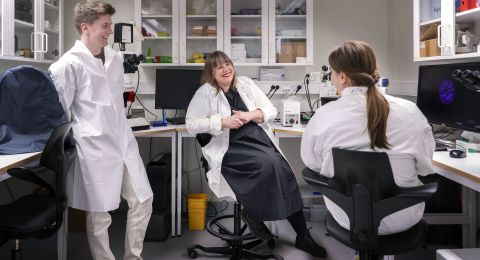
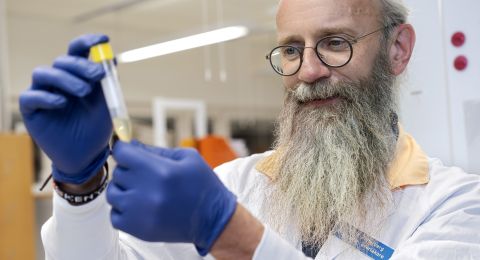
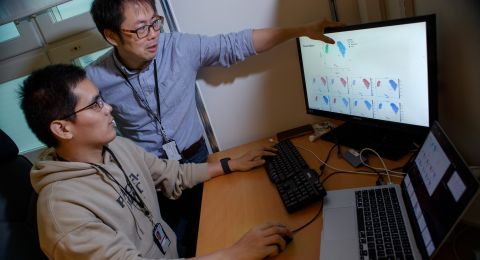
The research program, which uses the latest scientific technologies in AI, machine learning, and advanced computation, aims to lead to breakthroughs that can improve life for people, animals, and the environment—and society as a whole.
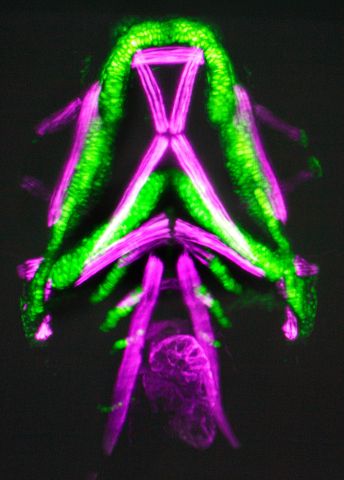
DDLS, Data-Driven Life Science
A national program in data-driven life science with four focus areas:
cell and molecular biology, evolution and biodiversity, precision medicine and diagnostics, and epidemiology and biology of infection.
Host:
SciLifeLab
Approved Grant:
SEK 3.55 billion, under the period 2020–2034
“The DDLS program, SciLifeLab and Wallenberg National Program for Data-Driven Life Science, is a major national research program that uses the power of computers and artificial intelligence to decode the magic of life. In other words, it aims to truly understand how life works and how it develops by using the enormous amounts of molecular measurements and data we collect today. This is an opportunity for biology in general, but also for medicine and the environmental sciences,” says Jan Ellenberg, professor of cell biology and biophysics, DDLS program director, and director of SciLifeLab.
Life science is a broad field of research that encompasses the study of all living things.
“It may seem overwhelming, because you might ask how we can understand both human disease and how a tree adapts to a changing climate. But the beauty about life science is that the molecular underpinning of all organisms on Earth is the same,” Ellenberg notes.
The molecular mechanisms—the way information is encoded in our genome, our DNA—are shared with all other organisms, as is how that information is then read out and used to produce living systems by making RNA and proteins.
“So, although we have this huge diversity of organisms that look very different and do very different things, they are, molecularly speaking, very similar. They all use the same principles for how they operate. That means the underlying mechanisms of life are largely shared and conserved. So, the amazing diversity of life we have on Earth has a common operating system. That is what we are trying to understand within the program—the common principles of how life functions and how it also sometimes malfunctions. With better understanding, we can, for example, better prevent disease and mitigate the effects of climate change on ecosystems.
From a Descriptive to a Predictive Science
Ellenberg points out that a paradigm shift has been underway for some time in life science, moving from a descriptive science toward the ability for researchers to look inside living systems and understand biological processes at the molecular level.
“Since the time of Linnaeus, biology has largely been a descriptive discipline. Linnaeus collected plants and systemized them by the number and arrangement of stamens and pistils. Since those days, life science has developed revolutionary technologies that allow imaging, observing and measuring even the smallest molecules in living systems. We can now truly look inside of living systems and study the molecular world within.”
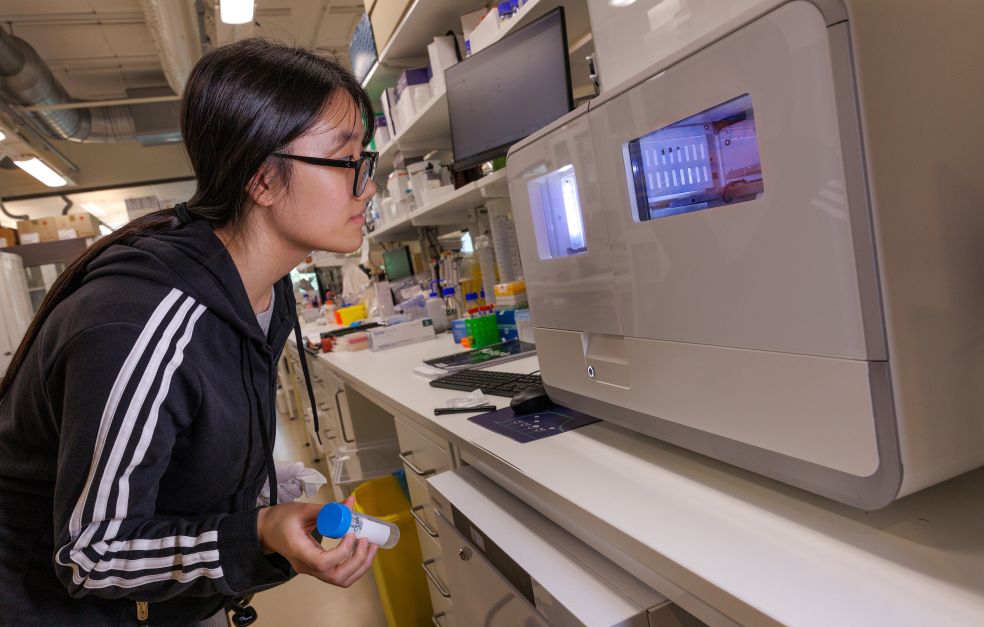
What has made this possible is rapid technological development that began long before the rise of AI. This is often called the omics and imaging revolution, referring to technologies such as genomics, transcriptomics, proteomics, and metabolomics, as well as molecular-resolution imaging technologies such as super-resolution microscopy and cryo electron microscopy—technologies that have already generated enormous amounts of valuable data and also paved the way for precision medicine.
“We can now reveal the molecular mechanisms in living systems, but they are very complicated. Living systems consist of hundreds of thousands of different molecules, all interacting with one another highly dynamically. I would say that molecules for life are what digits are for computer science. If you know and control them, you can also change things in a predictable manner.”
This means biology is moving from being a descriptive science to becoming a predictive one.
“We are moving from collecting information and observing to using all available information to create computational models of life. This will give us the ability to predict earlier when something is going to go wrong, for example, when something is on a trajectory towards disease. In the future, we will be able to use that knowledge to recognize disease at early stages and prevent it from occurring—or at least delay its onset.”
Four Focus Areas
Ellenberg explains that extensive molecular data are now becoming available from patients, for example with cancer, cardiovascular disease, and neurological and neurodegenerative diseases.
“A great deal of outstanding clinical research with new molecular technologies is underway. There are also first clinical studies and clinical trials where this comprehensive molecular data is being used, but it is not yet implemented in routine practice in health care.”
What is truly needed, and what the DDLS program contributes to, is expertise in interpreting very large and complex datasets and translating them into reliable decisions in health care.
Since the DDLS program began in 2020, extensive capacity building and the recruitment of young talent have been underway. Researchers from around the world, with expertise in both computational and life science, have been attracted to the program’s four focus areas: cell and molecular biology, evolution and biodiversity, precision medicine and diagnostics, and epidemiology and biology of infection.
“The program has been very successful in its recruitment phase; we have already recruited 40 principal investigators toward the current goal of 50 in open international calls. They come from all over the world to Sweden, and we have truly succeeded in attracting the best junior talent in this emerging field, even as competition is becoming increasingly intense—especially in computational life science, where it has intensified with AI.”
Unique program internationally
Ellenberg believes the program also has major international significance.
“To my knowledge, there are no comparable international initiatives of the same scale that recruit new investigators into one domain in such a concerted manner. In the current ten recruitments we are making, we are particularly prioritizing AI-driven computational approaches to life science.”
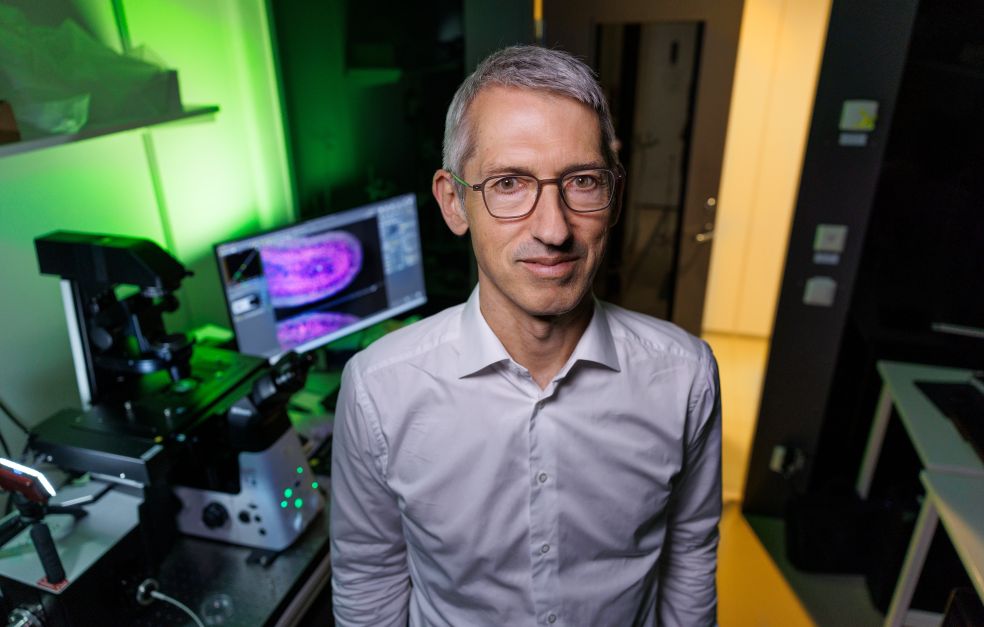
The DDLS program was planned before AI had made its major breakthrough. It was before ChatGPT became popular, before AlphaFold 2 —which can accurately predict the structure of individual proteins—existed.
“We now live in a time in life science when it takes about an hour and costs a few hundred dollars to get a genome sequenced, and at the same time we can obtain information about the transcriptome and proteome using complementary technologies. That means we get hundreds of thousands to millions of data points from a single analysis of one sample. To extract knowledge from these very large datasets, we need computer science and AI more than ever before.”
An important part of the DDLS program is therefore to set up the data services that this new research community needs to advance quickly and provide access to the high-performance computer power needed for the latest data analytics and AI models.
Ellenberg is optimistic about researchers’ ability to understand and decode the interactions among the molecules of life.
“It is a very exciting time. The field of life science has never moved faster than it is now, with the convergence of molecular technologies and AI. I believe we will make rapid progress in understanding the fundamental mechanisms that drive life, as well as recognizing, managing, and eventually, hopefully, curing disease much faster than we have before. The knowledge we need for this is now being generated very quickly. But we also need to translate these advances into health care. Let us work together to bring the results and the revolutionary tools from research into medical practice so that knowledge is converted into benefits for patients as quickly as possible.”
Text: Carina Dahlberg
Photo: Magnus Bergström
Application areas in life sciences
The research findings will be used in health care for the development of drugs, medical diagnostics, prevention and therapy, and also in veterinary medicine, plant and ecosystem research. Life sciences also play an ever more central role in industrial sectors such as pharmaceutical industry, biotechnology, as well as the food and paper industry.
Facts About Omics Technologies
- Genomics: Mapping the entire genome (DNA).
- Transcriptomics: Analyzing which genes are active (RNA).
- Proteomics: Mapping all proteins in a cell or tissue.
- Metabolomics: Measuring small molecules and metabolic products.
- Multi-omics: Integrating all these datasets to provide a complete picture of biological processes.