The complex structure of lignin has fascinated researchers for decades. The molecule is found in most biomass and has the potential to replace many fossil-based polymers. No one has yet fully succeeded in mapping the structure of lignin, but four research teams are now joining forces to achieve this.
Project grant 2024
“From atomistic to macroscopic understanding: unraveling lignin's untapped potential as earth's most abundant natural phenolic compound”
Principal investigator:
Professor Minna Hakkarainen
Co-investigators:
KTH Royal Institute of Technology
Martin Lawoko
Linköping University
Igor Zozoulenko
Stockholm University
Mika Sipponen
Institution:
KTH Royal Institute of Technology
Grant:
SEK 24 million over five years
Sweden has one of the world’s leading wood and pulp industries, where the majority of forest raw materials are refined into new products. But there is one major exception: lignin. Every year, some 50–70 million tons of lignin quite literally go up in smoke at the world’s pulp mills to provide the industry with energy.
The explanation lies in lignin’s highly complex molecular structure, which also varies, depending on the species of tree or plant from which it comes. The process of extracting lignin from biomass also affects its chemical properties.
“Our project aims to increase knowledge and understanding of the structure and properties of lignin. In the next step, we hope to take advantage of its highly variable properties to create different products or applications,” says Hakkarainen, who is a professor of polymer technology at KTH Royal Institute of Technology.
Unknown Lego pieces
One of the reasons lignin remains so unexplored is the lack of sufficient analytical methods. A detailed molecular picture of lignin is required to take the step towards new applications. Martin Lawoko, professor of wood chemistry at KTH, likens it to building new models with unknown Lego pieces.
“We see that we have lots of different Lego pieces, but we don’t yet know how to assemble them. In this project, however, we have managed to bring together several research teams with the right expertise to make progress,” says Lawoko.
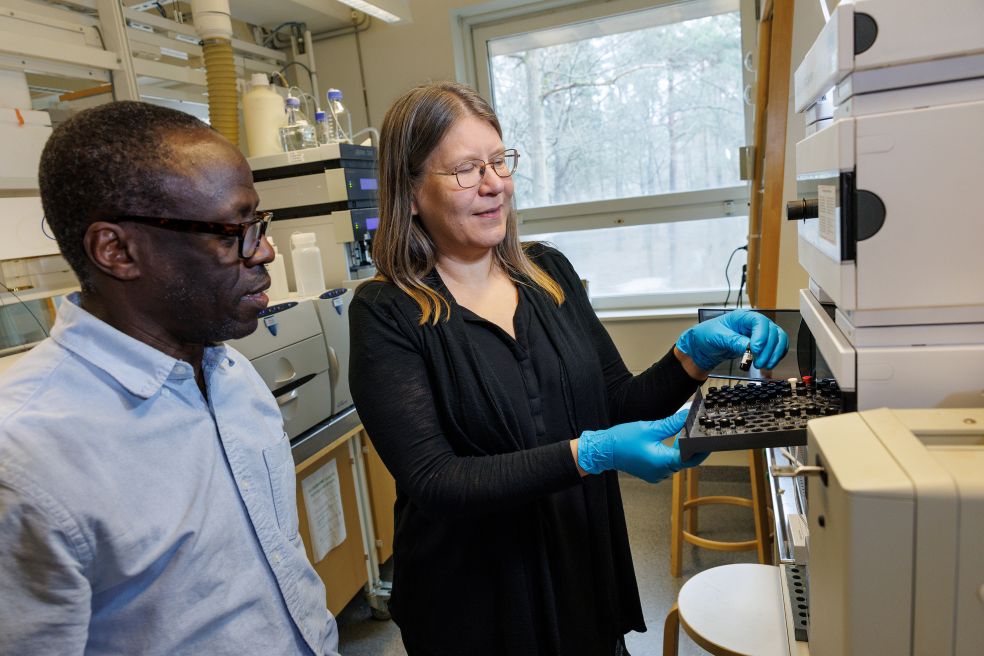
The project involves teams from three universities. Researchers at KTH will focus on advanced characterization of lignin using, among other things, synchrotron-based techniques that enable them to study materials at the atomic level. One of the facilities being used is the MAX IV Laboratory in Lund. The experiments will yield a greater understanding of the links between chemical structure and form, governing properties such as strength, durability and function.
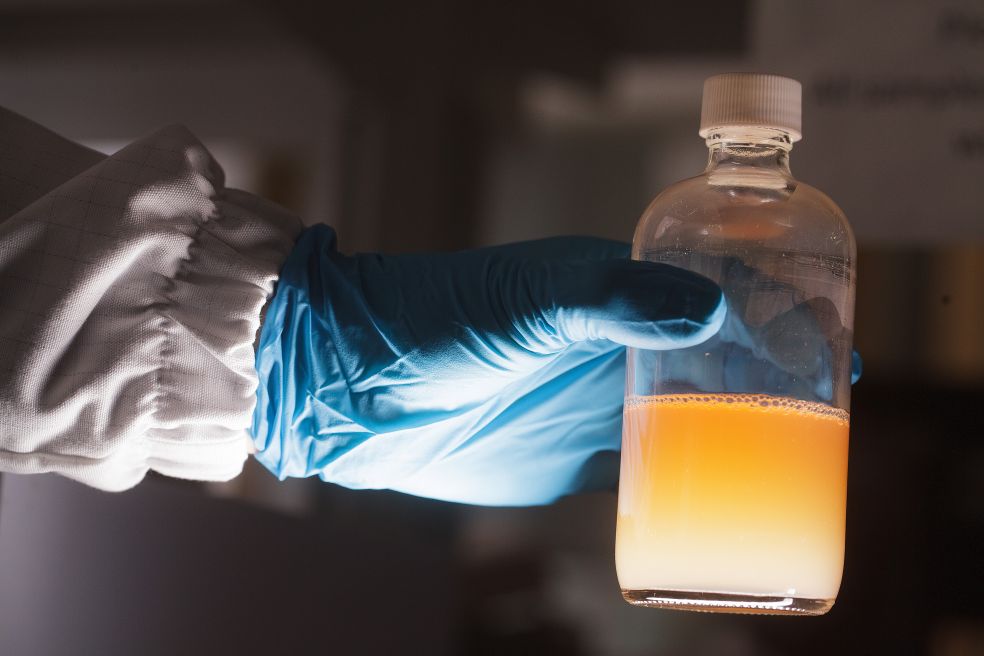
One aim is to develop methods to monitor, almost in real time, the structural transformation of lignin when it is extracted from biomass.
“We already have a special reactor to extract lignin using somewhat milder methods than those used in the industry. In this way, we will also try to preserve the original chemical structure,” says Hakkarainen.
The knowledge obtained is shared with researchers at Linköping University, who combine it with theoretical calculations to create computer models. The third research team is based at Stockholm University and focuses on identifying new practical uses for lignin.
Renewable source
Lignin is the largest renewable source of what chemists call “aromatic building blocks.” The term “aromatic” does not refer to smell, but is a chemical concept reflecting the structure of the molecule: a very stable six-membered ring that is often rigid and chemically difficult to break down.
Aromatic building blocks are crucial for a range of high-performance polymer materials, including thermosets, coatings and adhesives. Lignin also has several inherent properties, such as the ability to absorb ultraviolet light, which may offer potential for new products.
The project aims to develop at least one practical application of lignin that can also potentially be scaled up for industrial use.
“We have very deliberately chosen a difficult application requiring very high control over the material. The grant from Knut and Alice Wallenberg Foundation enables us to aim high, without being certain that we will actually succeed,” says Hakkarainen.
Mimicking the colors of birds
The focus is on developing a new type of coating for textiles: a film that can make textiles water-repellent and dye them. But not in a traditional way – rather by mimicking the way colors are rendered in the plumage of birds.
“Birds can be very colorful, but their colors don’t come from chemical molecules or pigments. They are created by special nanostructures in proteins in the feathers. We hope to replicate the same effect through strict control of lignin,” explains Mika Sipponen, a researcher at Stockholm University.
Pigments function as a filter that removes certain colors, whereas structural colors instead have an optical ability to bend and amplify light. The result is often vivid, shimmering hues.
But the researchers stress that the final product itself must be recyclable. Refinement of lignin is in line with the transition from a fossil-based society to a bioeconomy.
“As far as we know, we are the first to try to follow the entire chain from tree to final material to see what happens to lignin structure. Hopefully, this knowledge will lay the foundation for a database that can be used to develop applications we cannot yet imagine,” says Lawoko.
Text Magnus Trogen Pahlén
Translation Maxwell Arding
Photo Magnus Bergström