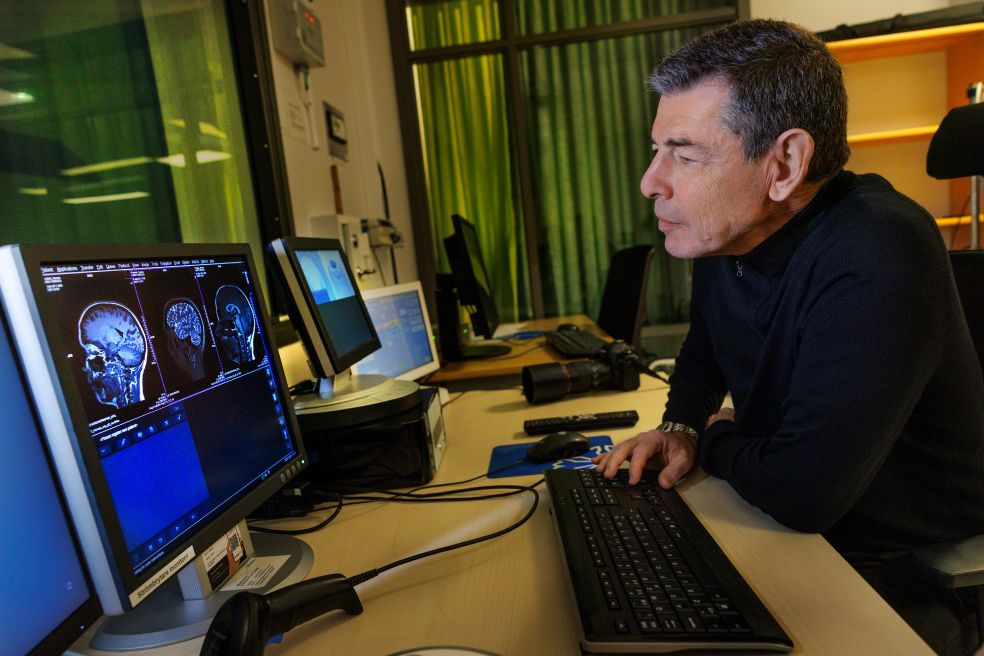
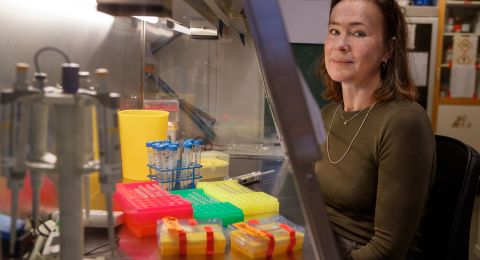
Wallenberg Clinical Scholar Markus Heilig is pursuing new lines of research to develop more treatment options for addictive disorders. But he also emphasizes the importance of disseminating and understanding that addiction is a disease in which brain function is altered.
Markus Heilig
Professor of Psychiatry
Wallenberg Clinical Scholar, grant extended 2025
Institution:
Linköping University
Research field:
Treatment of addiction disorders
The risk of developing alcohol dependence is genetic to a significant extent, with heritability in the range of 40–70 percent. Yet the misconception persists that addiction is about personal shortcomings.
“It’s not about a person being of poor character. The fact is we all draw different tickets in the genetic lottery. The stigmatization of addiction disorders makes it much more difficult to help those who are affected,” says Heilig.
Educating the public
Throughout his research career, he has worked to understand brain mechanisms that cause addiction. He is now calling for more public education initiatives to disseminate knowledge that has existed in research for decades: addiction disorders are caused by changes in the brain’s neurons that disrupt normal function.
“We can see a parallel to how some people shame individuals with obesity and urge them to make lifestyle changes, such as exercising more and eating less. But we now know that our BMI is about 80 percent governed by heredity, and that genetics is one of the factors behind increased appetite and lower physical activity.”
The new appetite-suppressant drugs can play a major role in changing attitudes toward people with obesity. Hopefully, a similar shift in attitudes toward addictive disorders can follow in the wake of more addiction therapies.
“We already have three drugs that are approved for the treatment of alcohol dependence. But patients are different, which is why it is essential to develop additional therapies – we need a larger toolbox.”
Activating brain cells
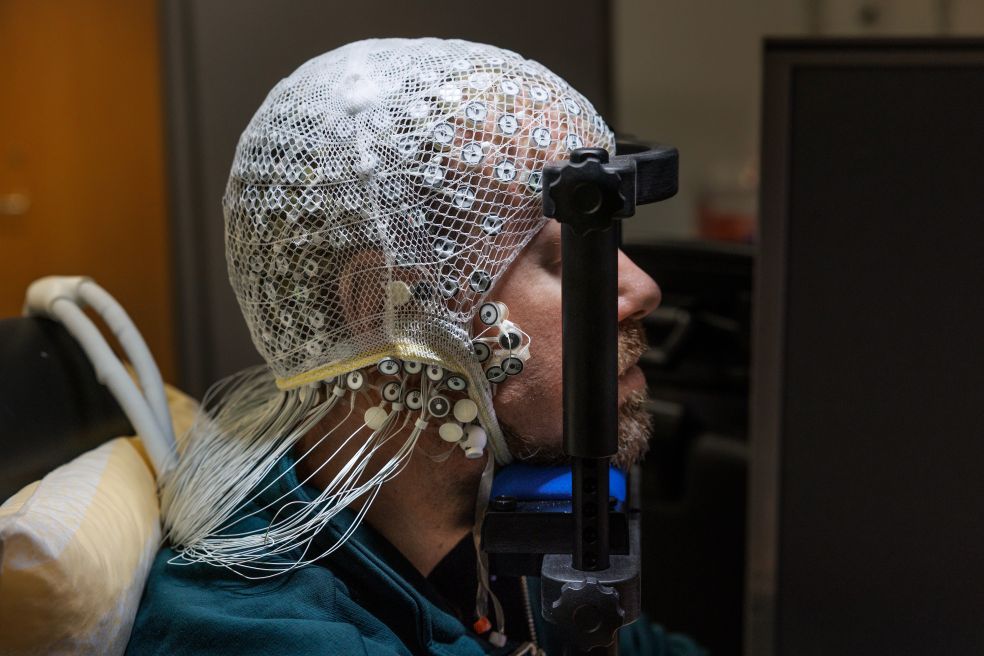
Heilig is pursuing several lines of research in pursuit of more treatment options. One of the most recent is a technique called transcranial magnetic stimulation (TMS). It uses rapid magnetic pulses to influence brain activity.
In TMS, a magnetic field is placed on the head, and when the field reaches nerve tissue, a weak local electrical current is created in the cells. The frequency of the stimulation can then be controlled to impact the activity of selected nerve cells – either to dampen nerve cells that are overactive, or to activate those that are dormant.
“TMS is already used successfully to treat depression and is also approved for the treatment of obsessive-compulsive disorder. In an initial study, we have shown we can achieve a positive effect on the parts of the brain that are involved in addiction disorders, and this is accompanied by reduced alcohol use.”
The next step is to confirm the findings in a much larger study conducted together with a medical device company. The hope is to involve approximately 200 participants at 15 locations around the world.
“If we can confirm our initial results, this will be approved as a new clinical treatment for alcohol addiction.”
Support for purely curiosity-driven research is important, particularly when it comes to difficult-to-understand phenomena such as alcohol dependence.
Heilig’s research team has also identified another application for the TMS technique, namely as a biomarker for drugs.
The researchers earlier demonstrated the importance of GABA, a neurotransmitter, in alcohol dependence. The discovery was published in Science in 2018, but it has proven difficult to develop new drugs based on these findings. One reason has been a lack of biomarkers that can show the effect of a new drug. However, thanks to ingenious use of the TMS technique, it is now possible to show whether or not a drug works.
“Working with a pharmaceutical company, we have also identified two drug candidates whose effects we will study using TMS.”
Genetic studies
As yet, there is no cure for addiction disorders. A cure will require methods to counteract the long-term changes in the brain that result from addiction. One path forward may be through new insights into how cells regulate the interpretation of our genes, known as epigenetic regulation.
With the help of large-scale genetic studies, Heilig’s team has identified an enzyme that appears to alter the interpretation of DNA in people with addiction. The question is whether it is possible to knock out this enzyme to create a disease modifying treatment for addiction. He himself describes it as something of a long shot.
“Of course I dream of disease modifying treatments, but it is important to humbly remind oneself that at present we cannot cure very much in any area of medicine, apart from conditions like a broken leg or pneumonia. I will be satisfied if we can treat alcohol dependence so that the patient remains healthy and has a good quality of life.
Until we see more effective treatments for addiction disorders, we must invest more in public education,” says Heilig, who is happy to do his part. This spring, his fourth popular science book will be published, and he gladly contributes as an expert in newspapers and on television.
“The scientific advances of recent years have been much greater than most people realize. We know more and more about how our genetics govern our behavior and brain function. It’s frustrating that this is not brought to the fore in the media,” says Heilig.
Text Magnus Trogen Pahlén
Translation Maxwell Arding
Photo Magnus Bergström