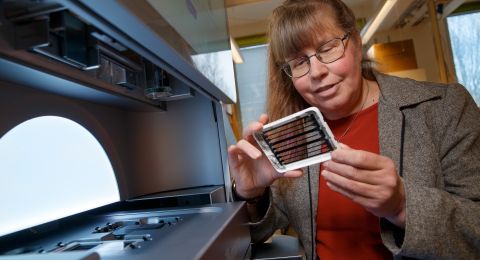
Further development of a 60-year-old technique for measuring nerve pain may lead to a better understanding of fibromyalgia, rheumatism and migraine. Wallenberg Clinical Scholar Håkan Olausson is one of the few who have mastered the technique.
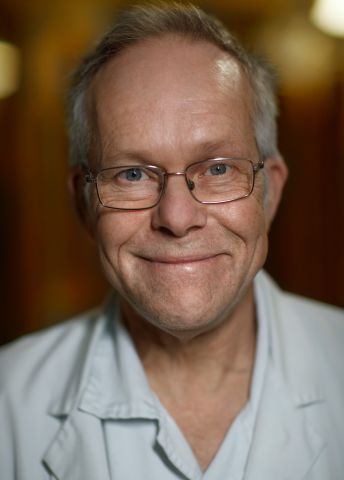
Håkan Olausson
Senior Consultant and Professor of Clinical Neuroscience
Wallenberg Clinical Scholar, grant extended 2025
Institution:
Linköping University
Research field:
Pain in various disease states
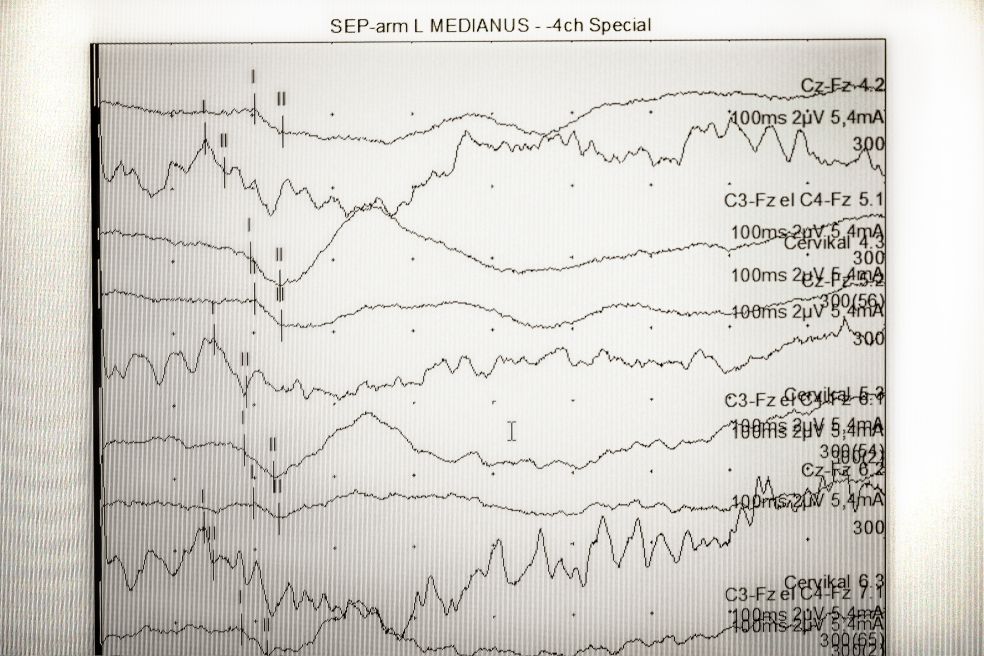
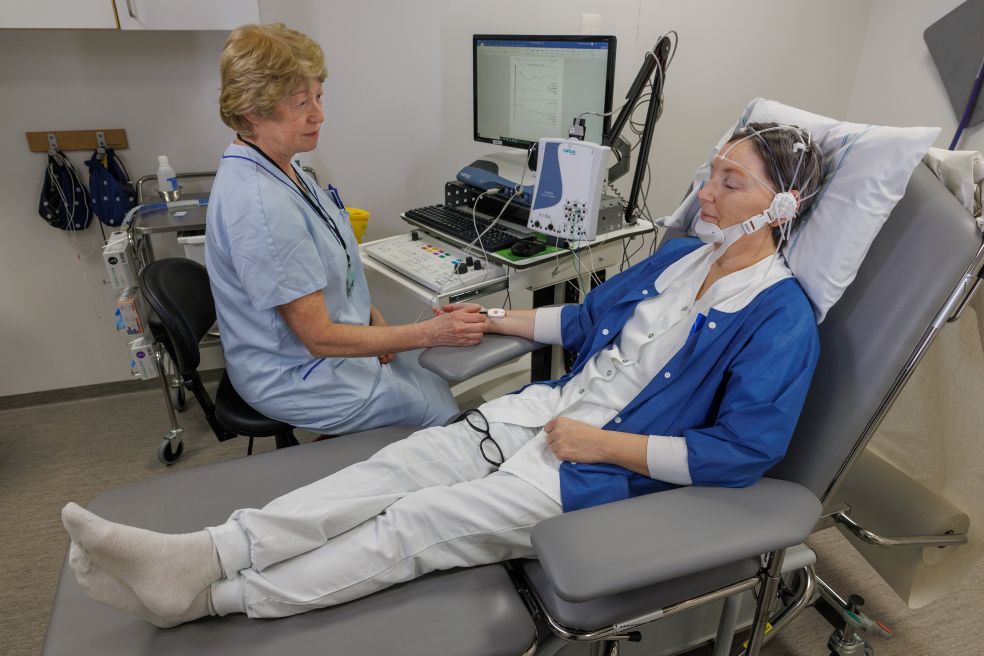
The method, known as microneurography, makes it possible to listen to signals traveling in a single nerve fiber in the body. It has existed since the late 1960s but has been difficult to use in practice. Success requires inserting an extremely thin needle into a selected nerve. Finding the right nerve requires great precision and can take hours.
However, a breakthrough occurred when Olausson’s research team began using ultrasound to guide the needle.
“We were able to use ultrasound to shorten the examination time to about 10–20 minutes. This dramatic improvement meant we could begin using the technique on patients, not only on healthy volunteers,” says Olausson.
The technique is now being used at three labs in Sweden and one in the United States to increase understanding of pain. The researchers are also investigating whether it is possible to use the “feel-good hormone” oxytocin to completely prevent pain from arising.
Clinical benefit the goal
When Olausson meets us in a corridor at Linköping University Hospital, he is wearing a white doctor’s coat. As a Wallenberg Clinical Scholar, he represents an important link between research and patients. As a pain physician, he has met many patients with chronic pain that is difficult to alleviate. When he received the grant, it marked the start of more patient-oriented research than before.
“Before that, I was engaged in pure scientific research, but as a Wallenberg Clinical Scholar I hope that my work can yield practical clinical benefits. We are now trying to map the landscape of different disease states that lead to pain,” he says.
His research combines microneurography with genetic analysis methods such as RNA sequencing, along with other approaches. One example is a project at Karolinska Institutet led by Wallenberg Scholar Patrik Ernfors, which is investigating the origin of pain in rheumatoid arthritis.
Karolinska Institutet is home to one of the three Swedish labs for microneurography that Olausson has established. A research project is also being conducted there to examine the connection between pain and cognitive functions in fibromyalgia patients.
The other two labs are both located at Linköping University Hospital and house projects on migraine pain and the effects of the hormone oxytocin on nerve pain.
“We’re participating in a large pharmaceutical study based on the hypothesis that oxytocin will prevent the development of nerve hypersensitivity. It’s a very exciting field.”
“Success in research often comes down to choosing the right project. But it’s not easy, because we rarely lack ideas. But some things offer more potential than others.”
Focus on the love hormone
Oxytocin has been nicknamed the “love hormone” and the “feel-good hormone” because it is released in the body in response to hugs, touch, sex and other stimuli. The hormone inhibits the stress system and creates feelings of calm and security.
In animal studies, researchers have shown that oxytocin can also reduce hypersensitivity in pain nerve cells (nociceptors). Trials are now being conducted in Linköping to see whether this is also true in humans.
“If oxytocin has a protective effect on our nerve cells, it could be administered before surgery, for instance. This would then help reduce or prevent pain after the procedure.”
A broader use of the microneurography technique could lead to more advances in pain research. However, more people are needed who can master the technique. Despite further development using ultrasound, a long learning period is required to produce good results. The lack of skilled practitioners is a bottleneck in the research.
“In the fibromyalgia project at KI, we only have the capacity to accept two patients per week. At least 60 patients are required to generate results that enable us to draw reliable conclusions.”
The pleasure of touch
When it was time for university, Olausson chose between medical school and an engineering program. He opted to study medicine, followed by a research career that led him to Linköping.
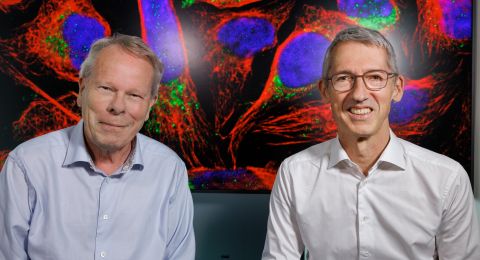
He and Wallenberg Clinical Scholar Markus Heilig have established the Center for Social and Affective Neuroscience (CSAN).
“We joined Linköping University at the same time and quickly saw how we could collaborate around CSAN. We have now succeeded in creating a strong research environment that has functioned very well over the years,” says Olausson.
He has made several major discoveries about the human nervous system, including a specific type of neuron that signals pleasant touch.
“The nerve cell signals the pleasure of touch and is the reason we enjoy being touched by others. We were able to show exactly how it can be activated, which sparked great interest.”
That interest persists to this day, and Olausson is working with researchers at the Swedish School of Textiles in Borås on a potential application: a shirt that can hug.
“The idea is to send an electric current through a special textile that then contracts. This can provide a pleasant touch sensation that activates the nerve cells we previously discovered. It is quite possible that this is also related to the release of oxytocin.”
Text: Magnus Trogen Pahlén
Translation: Maxwell Arding
Photo: Magnus Bergström