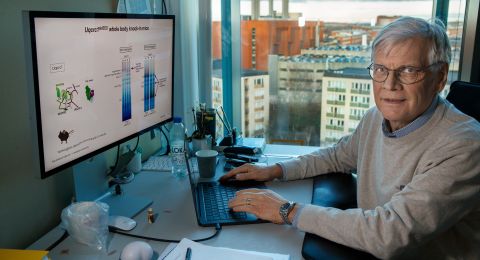
Why do some autoimmune diseases heal spontaneously while others become chronic? Olle Kämpe is searching for crucial clues in tissues, genes and proteins in order to stop the diseases before they break out.
Olle Kämpe
Senior Consultant and Professor of Clinical Endocrinology
Wallenberg Clinical Scholar, grant extended 2025
Institution:
Karolinska Institutet
Research field:
Autoimmune diseases
Our immune system acts as a shield against bacteria, viruses and other external enemies. A well-functioning immune system can distinguish between components that belong to our own cells and those that belong to microorganisms. But if the immune system loses this ability, it may instead attack the body’s own cells and tissues, resulting in an autoimmune disease.
There are more than one hundred known autoimmune diseases, including psoriasis, type 1 diabetes and multiple sclerosis (MS).
Wallenberg Clinical Scholar Olle Kämpe wants to understand why autoimmune diseases occur and why only some people are affected.
“The goal is to be able to alleviate symptoms, and ultimately to find a treatment that reduces the risk of disease developing,” he says.
Focus on model diseases
Between seven and eight percent of the Swedish population have an autoimmune diagnosis. Kämpe and his research team are primarily focusing on model diseases in order to understand autoimmunity.
One example is Addison’s disease, a chronic condition in which the adrenal glands produce insufficient quantities of cortisol and aldosterone – two vital hormones. Without treatment, Addison’s disease is fatal.
“We are attempting to find out whether there is a common trigger linking multiple autoimmune diseases. We know that people suffering from one autoimmune disease are at risk of developing other autoimmune diseases,” says Kämpe.
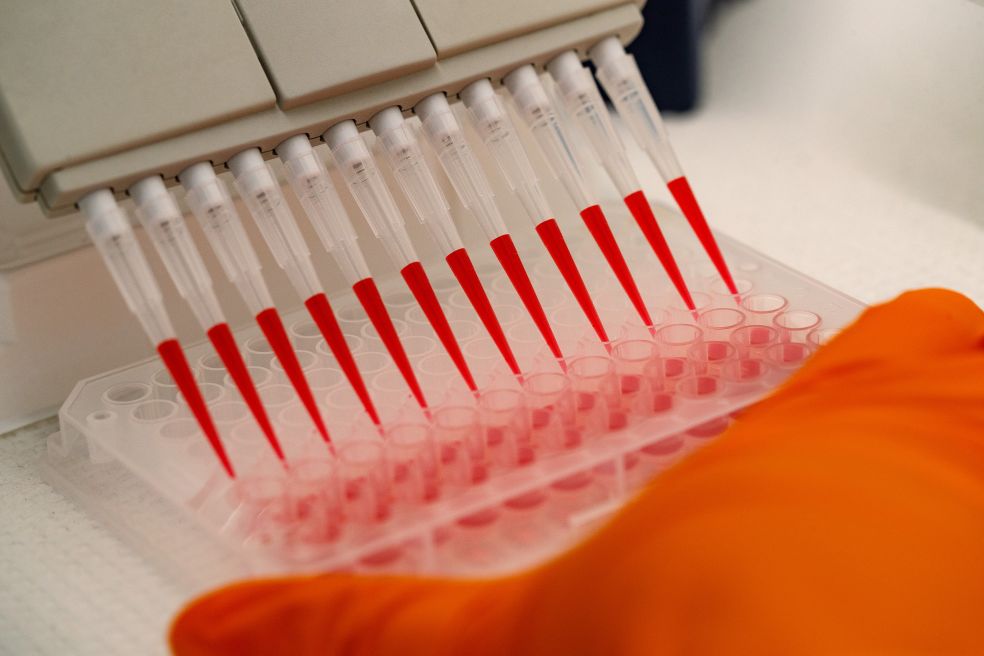
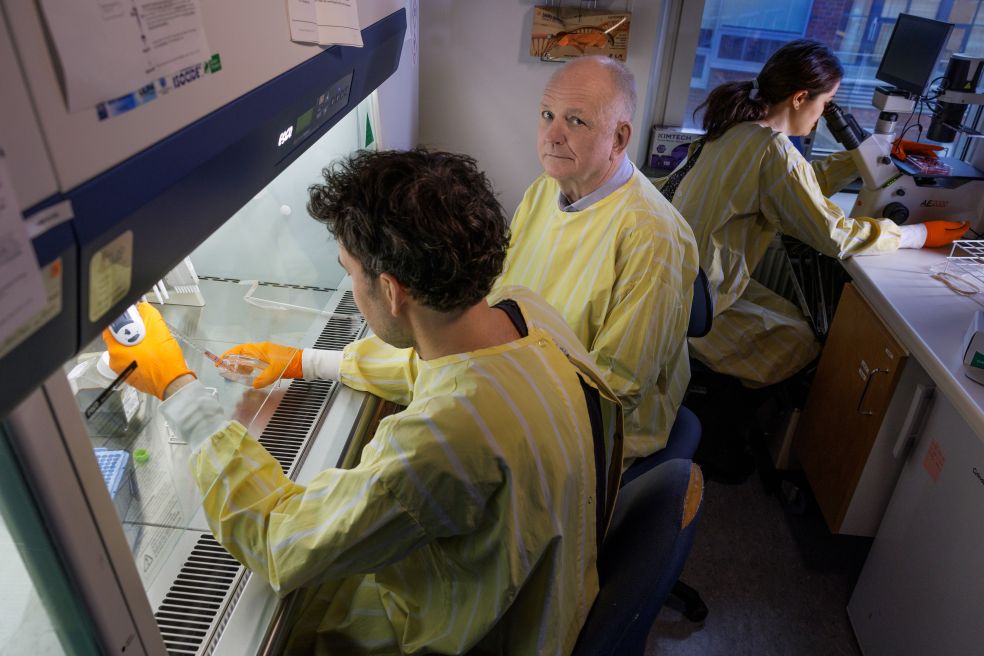
He is using sequencing technology and other methods to search for clues in his patients’ internal tissues, in the genes of those tissues and in the proteins encoded by those genes.
“We don’t know yet what causes the autoimmune reaction, but we do know that it begins several years before symptoms appear.”
Genes linked to disease
The Swedish Addison’s Register contains samples from more than one thousand patients and is the world’s largest biobank for the disease. The researchers are using DNA in blood samples to gain a better understanding of the heritability of the disease.
“We’re searching for genes that can be linked to the disease. So far, we have discovered that a variant of the AIRE gene, carried by only 1.5 percent of the Swedish population, is a strong risk factor for Addison’s disease. AIRE plays a key role in the thymus, where T cells develop.”
Kämpe and his team made an important discovery as long ago as the early 1990s. They were able to demonstrate that the immune systems of all patients with Addison’s disease reacted to an enzyme called 21-hydroxylase. As a result, physicians worldwide now test for 21-hydroxylase if they suspect that a patient is suffering from Addison’s disease.
By studying autoimmune conditions that are self-limiting, we hope to increase our understanding of which physiological mechanisms can halt an attack against the body’s own tissue.
Kämpe works clinically as a physician at Karolinska University Hospital one day a week. This gives him greater understanding of what patients themselves consider most important.
A simple virus
One working hypothesis for the research team is that Addison’s disease and other autoimmune diseases could be triggered by a virus that usually resolves without us even noticing it, for example a harmless eye infection. However, in a small proportion of the population, the virus may initiate a cross-reaction with 21-hydroxylase, causing the immune system to malfunction and an autoimmune disease to develop.
“Much research remains to be done, but if the hypothesis proves correct, a vaccine could stop the disease or at least reduce the risk of it breaking out,” says Kämpe.
In recent years, he has become increasingly interested in autoimmune diseases that are self-limiting and heal spontaneously, in contrast to chronic diseases. One example is autoimmune thyroiditis (postpartum thyroiditis), which can occur after pregnancy or childbirth.
He says that the extended research grant from Knut and Alice Wallenberg Foundation provides long-term stability for this new line of research:
“We will be studying autoimmune conditions that are self-limiting in the hope of improving our understanding of the physiological mechanisms that can halt an attack against the body’s own tissue.”
Tissue-specific proteins
In autoimmune thyroiditis, tissue-specific proteins are attacked. These are proteins that exist only inside the cells of the tissue being targeted. The disease affects between five and ten percent of all pregnant women. Most of them recover within twelve months without any treatment.
Kämpe and his team have benefited greatly from technology developed by Olink, an Uppsala-based company. The technology enables the researchers to measure and identify large quantities of important biomarkers from a single blood sample or a small tissue sample.
“The technology is revolutionary and helps us identify patterns linked to different autoimmune conditions. In the case of autoimmune thyroiditis, we hope to understand what happens from six to twelve months after childbirth, when the disease resolves spontaneously.”
Recruitment is currently under way for a study that will include 80 women with ongoing or resolved autoimmune thyroiditis. The study, which is the first of its kind, will be conducted in spring 2026.
Text Ylva Carlsson
Translation Maxwell Arding
Photo Magnus Bergström