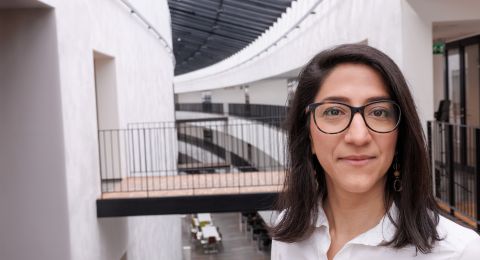
Wallenberg Academy Fellow Ilaria Piazza wants to show how substances such as drugs and hormones impact the function of cellular proteins. Her research team is focusing on the proteins responsible for extracting information from our DNA. The results are presented as short films from inside cells.
Dr. Ilaria Piazza
PhD, Biochemistry and Molecular Biology
Wallenberg Academy Fellow
Institution:
Stockholm University
Research field:
Regulation of proteins in our cells and how this affects cellular metabolism
Every breath, heartbeat and thought in our body depends on proteins. They produce building blocks and signaling molecules while regulating genes and copying DNA when cells divide. Proteins are the workhorses of the body.
Every human cell expresses thousands of different proteins. The function of each one is governed by its three-dimensional shape. But that shape is not constant; it is continually influenced by a wide range of factors: from amino acids and vitamins to hormones within the cell.
Piazza is investigating how the shapes of proteins are affected by small molecules.
“We want to create a catalogue of protein shapes, showing what influences them, and how they change in different environments. A protein can adapt its shape almost instantaneously to a change in its surroundings. Yet we still know surprisingly little about how they are regulated,” she says.
Constant flux
Inside every cell proteins are constantly binding to each other, separating, changing shape and responding to new signals. Billions of tiny molecules drive these changes. Many drugs are designed to switch specific disease-related proteins on or off.
Since proteins were discovered, researchers have spent a great deal of time mapping and identifying each individual protein. Their aim has often been to identify the proteins that are specific to different cell types and offer potential as targets for new drugs.
Rather than simply identifying proteins, Piazza aims to determine their precise shape at a given moment and understand what governs these transformations.
“We need to understand the rules governing inactivation or activation of a given protein. This will help us to explain the next step in cell change, which may trigger the onset of a disease such as cancer.”
If this mapping can reveal which molecules are responsible for a specific change, it may also become possible to trace the origin of those molecules. For example, we know that bacteria in the intestines produce a range of substances that affect our wellbeing. As we know more about how these substances alter cell proteins, we will also better understand the link between intestinal bacterial culture and our wellbeing.
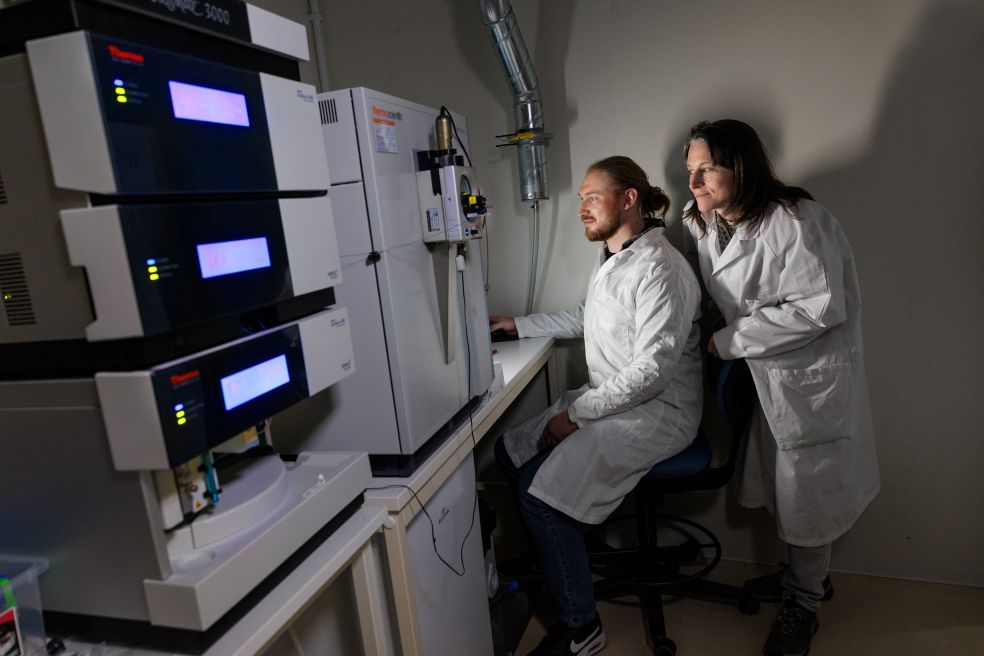
She is using several advanced techniques to monitor these changes. Her primary tool is mass spectrometry, a technique that has long been used to identify individual proteins, but Piazza has developed new methods that enable her to study structural changes across thousands of proteins at the same time.
Filming proteins
The methods allow the researchers to take molecular snapshots of cells under different conditions or at different time points. By comparing these snapshots, they can reconstruct how protein states change in response to their environment.
We have gone from studying one protein at a time to trying to create a systematic understanding of many protein structures simultaneously.
Mass spectrometry admittedly does not provide as high a resolution as other techniques, but films still do much to enhance knowledge.
“When we need higher-resolution images, we deploy other techniques. These include cryo-electron microscopy, which can show individual molecules at the atomic level,” she says.
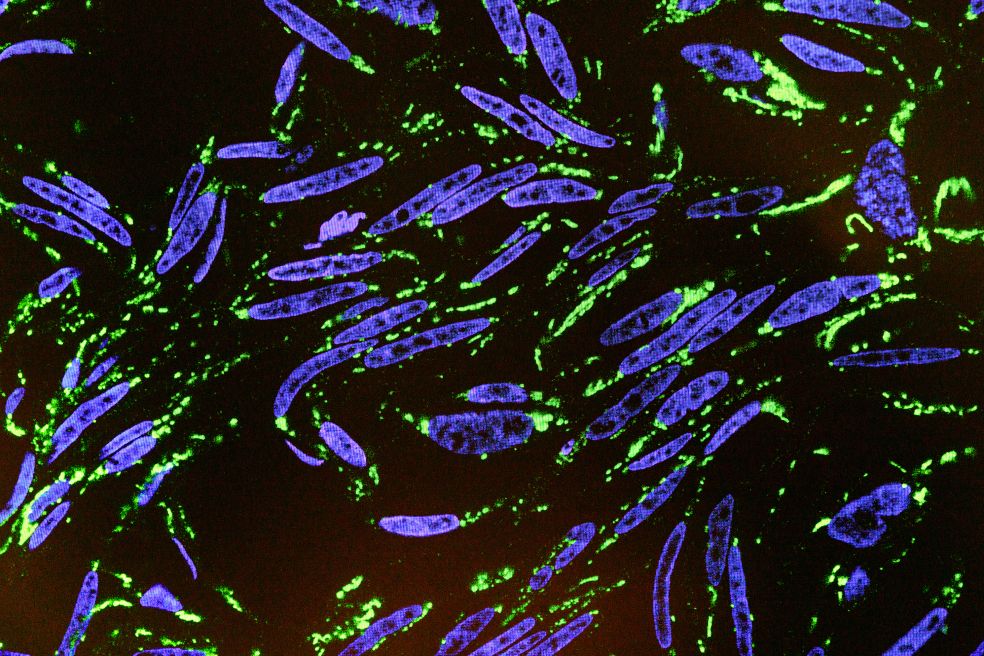
The team is particularly interested in chromatin – the three-dimensional DNA–protein complex that forms chromosomes in the cell nucleus. Changes in chromatin proteins influence how DNA information is used.
“Our aim is to understand when, how and why particular genetic information is activated or silenced. We are trying to understand how changes in the chromatin’s surroundings influence which parts of the genome are active and which remain silent. This is truly pure scientific research whose purpose is to gain a better understanding of the fundaments of all biochemistry.”
The lure of technology
Piazza recently moved to SciLifeLab in Solna from the Max Delbrück Center for Molecular Medicine in Berlin. She stresses that funding from Knut and Alice Wallenberg Foundation enabled her to make the move.
“We’re still in the start-up phase at the lab, and I’m looking forward to using multiple techniques to make progress. It will be particularly interesting to see how we can use advances in AI to improve our methods.”
Originally drawn to technology by her father’s electronics shop in Milan, she began engineering studies before turning to biology.
“The reason was simple: I wanted to understand how life works. When I realized I could spend my life attempting to understand what no one had yet explained, I chose a career in research,” Piazza says.
Text Magnus Trogen Pahlén
Translation Maxwell Arding
Photo Magnus Bergström