How does a tree know when it is time to grow, when to flower – and when it must shut down for winter to survive the next season? At the Swedish University of Agricultural Sciences in Umeå, Wallenberg Scholar Professor Ove Nilsson is working to find the answer in a single small gene that functions as nature’s own clock.
Ove Nilsson
Professor of Forest Genetics and Plant Physiology
Wallenberg Scholar
Institution:
Swedish University of Agricultural Sciences
Research field:
Plant developmental biology, with emphasis on the mechanisms that control plant flowering
The story of Nilsson’s research began with a fundamental interest in plants. Even as a young field biologist, he was drawn to nature and the patterns that govern the rhythms of life – why some plants flower early, others late, and how everything seems to follow an invisible calendar.
“Flowering is one of the most striking differences between plants, and is also crucial to their survival,” says Nilsson.
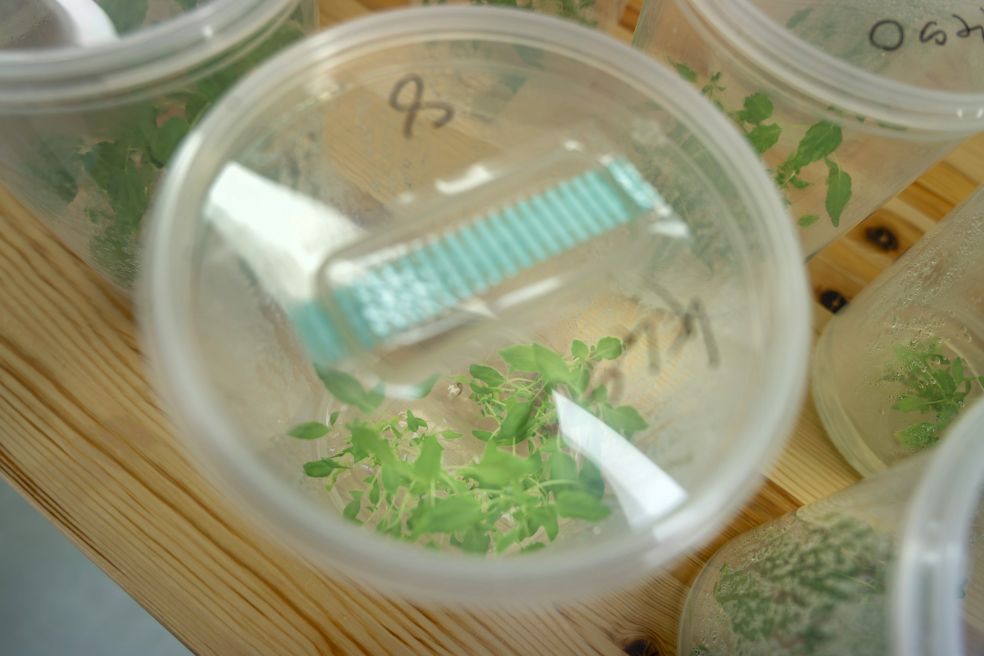
To understand the bigger picture, he started small. Using Arabidopsis (thale cress), an inconspicuous little plant often described as the plant research equivalent of a lab rat, scientists were for the first time able to properly map the genes behind flowering.
Here, Nilsson made key discoveries. He helped identify genes that not only control how the flower itself is formed, but also when the plant chooses to flower. It was a breakthrough.
“I have shown that knowledge from Arabidopsis can also be applied to trees and that flowering can be controlled. If the same genetic mechanisms exist both in small herbs and in large trees, this will offer completely new opportunities to influence the life cycle of trees,” he says.
The difference in timescale is enormous. A small plant can flower after just a few weeks. A tree may need several decades.
“That delay is one of forestry’s biggest obstacles – it simply takes too long to develop new, better, and more resilient trees,” says Nilsson.
The FT gene controls flowering and winter dormancy
When Nilsson and his research team worked with hybrid aspen, they demonstrated that a central gene, the “FT” gene, functions as a signaling molecule in the plant. It responds to daylight and temperature and tells the plant when it is time to flower and when it is time to stop growing.
They were then able to use this knowledge to induce genetically modified hybrid aspens to flower after only a few months instead of many years. What initially looked like a breakthrough quickly proved to be more complex than expected. When the trees began to flower early, a new problem emerged. They lost their natural rhythm.
“We discovered something completely unexpected – the trees lost the ability to stop growing and set buds in the autumn,” explains Nilsson.
In aspens, the gene acts as a kind of shutdown signal in the autumn. As the days grow shorter, FT gene activity subsides, causing the tree to stop growing and instead form buds that will survive the winter. Without that signal, growth continues for too long – which can be life-threatening in a cold climate.
The researchers also discovered that aspen does not have just one FT gene, but several variants that control different parts of its annual cycle. Another variant is activated in spring and determines when the tree awakens from winter dormancy and the buds burst.
We want to understand how the tree detects the length of the days and converts that information into biological decisions.
“No single gene controls everything; there are several FT variants that together shape the tree’s calendar,” says Nilsson.
Important understanding in a changing climate
The research team is now attempting to ascertain how these genes are regulated by other signals in the plant, particularly light and temperature. In other words, how the tree detects the length of the days and converts that information into biological decisions.
The researchers are also investigating how small genetic differences between different FT genes allow aspens to grow throughout Sweden – from milder climates in the south to colder ones in the north, where growth must stop early to avoid frost damage.
“The genetic variation in the FT system is one of the reasons that aspen can cope with such different climates,” he says.
This knowledge also has broader significance. As the climate changes, the signals on which the trees’ internal clock depends are disrupted. Understanding the FT gene thus becomes central to predicting how forests will respond to future climate change.
“Climate change is disrupting the signals that trees have adapted to over thousands of years – and it is already affecting forest growth and health. We need to understand all the factors that govern this,” he says.
Want to shorten the time for plant breeding
The research team is also working to understand how the FT system affects other tree species, including Norway spruce, which flowers even later than aspen and has a much more complex genome.
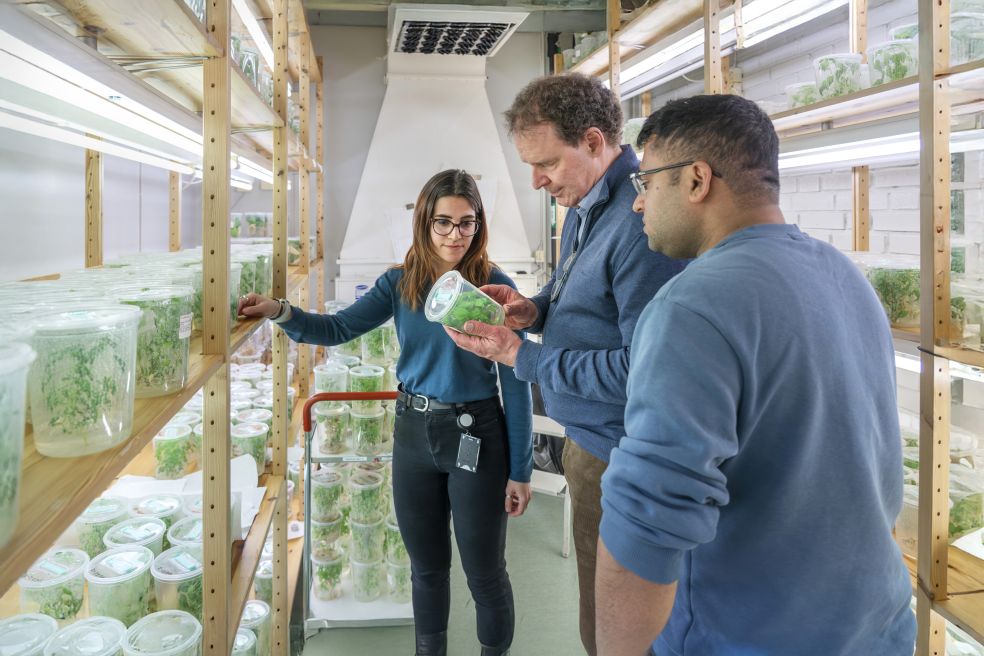
The researchers are using advanced glasshouses and climate chambers at Umeå Plant Science Centre to simulate different seasons and test how trees respond to changing conditions. Here, genetics is linked with climate research and, ultimately, with the forestry of the future.
One of their long-term goals is to shorten the time required for plant breeding. If trees can be made to flower earlier, new varieties can be developed much faster – something that can take several decades at present.
But the research does not stop at applications. At its core, it is about curiosity.
“I’m driven by a desire to understand how nature works, and to contribute to more sustainable agriculture and forestry.”
Text Elin Olsson
Translation Maxwell Arding
Photo Johan Gunséus