An exciting class of materials – halide perovskites – has emerged as a very promising candidate for future solar cells and optical components such as LED lighting. But a great deal of energy may be lost at the interface between halide perovskites and other materials. Julia Wiktor heads four research teams that will be investigating why this happens and use that knowledge to further enhance the materials.
Project Grant 2024
“From atoms to devices: Understanding interface phenomena for better perovskite optoelectronics”
Principal investigator:
Professor Julia Wiktor
Co-investigators:
Chalmers University of Technology
Paul Erhart
Maths Karlsson
Linköping University
Feng Gao
Institution:
Chalmers University of Technology
Grant:
SEK 25 million over five years
Halide perovskites are a class of materials with a specific crystal structure. They have revolutionized research in optoelectronics and offer new potential for the global energy transition. These materials can absorb and emit light extremely efficiently and are fairly simple and potentially cost-effective to manufacture. This makes them particularly attractive for use in the solar cells and light-emitting diodes (LEDs) of the future.
“Halide perovskites are exciting materials because they are extremely good at absorbing sunlight. But they can also become unstable and may gradually lose the desirable properties we are seeking,” says Wiktor, who has worked in this field for many years.
Energy loss at the interfaces
Problems can arise at the interface between halide perovskites and other materials, such as the electrodes in solar cells. Some of the energy absorbed by the materials may be lost here instead of being delivered to the power grid. Little is known about why this happens, partly because the interfaces are extremely difficult to study.
Wiktor is heading a new project funded by Knut and Alice Wallenberg Foundation that brings together four research teams at Chalmers University of Technology and Linköping University.
“We need to understand exactly what happens at the interfaces so we can target and counteract the processes that degrade the materials. Measuring and studying these interfaces is complex because they are covered by surrounding materials. To succeed, we need new methods and techniques, which we will develop in this project.”
Stabilizing the interfaces
One challenge in halide perovskites is that they can undergo changes at the interfaces with other materials, affecting their stability and performance. The researchers aim to map and understand these changes and the mechanisms behind them. One key idea is to use different molecules to stabilize the interfaces.
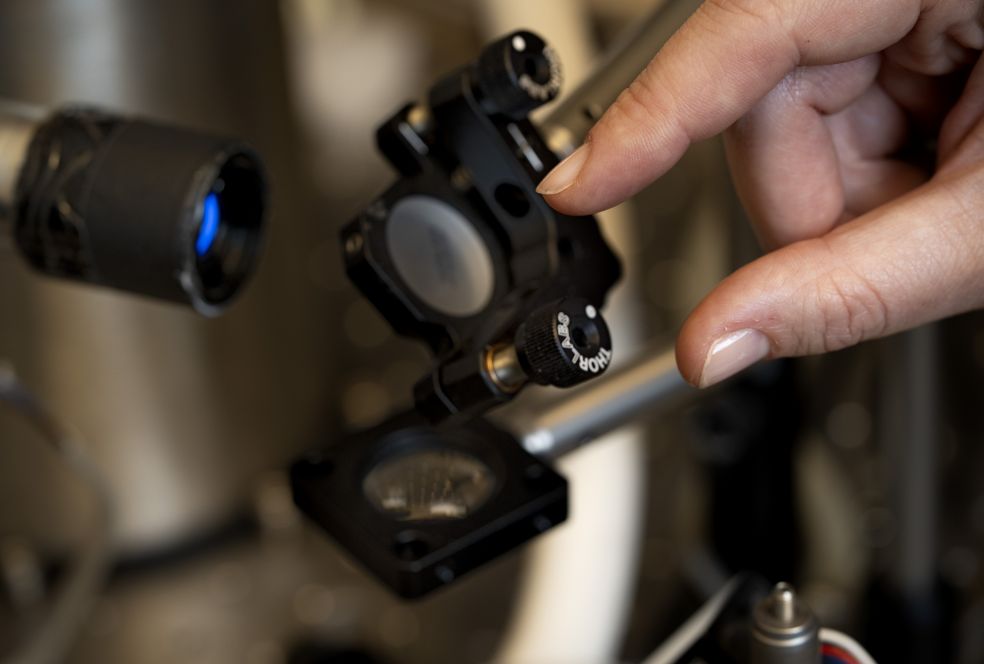
“Perhaps we can place certain chemical molecules at the interface that bind to the surface and thereby reduce degradation. But we need to identify the very best molecules, so we will explore different approaches.”
The project combines experiments and computational modeling to investigate the detrimental processes that occur at the interfaces, understand their underlying mechanisms, and explore how they can be prevented or reduced. Existing techniques are often not well suited to studying processes at buried interfaces between different materials. The researchers are therefore developing experimental methods specifically designed to examine interfaces in detail – from the atomic level all the way to device level.
The project has two clear goals.
“I hope we’ll be able to truly understand and characterize the problems arising at the interfaces and negatively impacting the materials. I also hope we can use that knowledge to create even more stable perovskite materials that do not lose their light-absorbing capability at the interfaces – and that we can test these materials in prototype solar cells.”
Societal benefit a key driver
Wiktor hopes the project will make a major contribution to research on halide perovskite materials and pave the way for further technological breakthroughs. Although the research focuses on solar cells and LED lighting, the results may also have a bearing on the development of sensors, photocatalysis and neuromorphic computing – technology that functions in a way similar to the human brain.
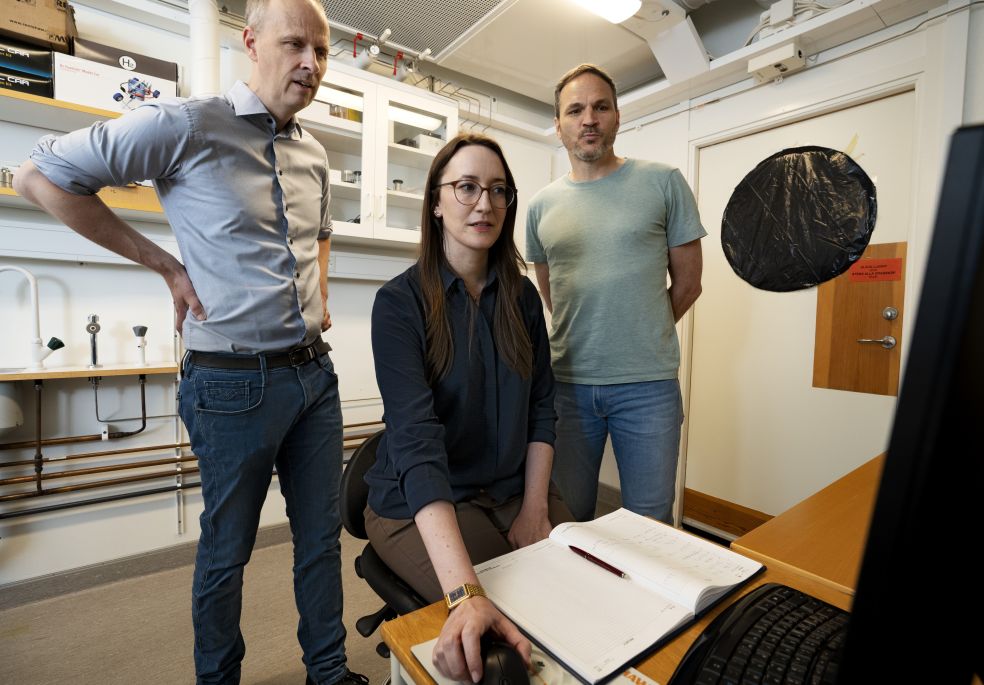
She emphasizes that the project participants have exactly the right expertise for the research objectives and for the advanced computational models and experimental methods to be developed.
“We are a strong team in every area involved in the project, and we work really well together.”
Being able to contribute to the essential energy transition in a world of ever-increasing energy consumption is an important motivator.
“I enjoy working on truly fundamental research questions. My work involves solving puzzles, and that motivates me every day. It’s also gratifying that the research is of such clear benefit to society. How we generate and use energy is incredibly important, and it’s inspiring that the potential applications of my research are so close at hand.”
Text Ulrika Ernström
Translation Maxwell Arding
Photo Johan Wingborg