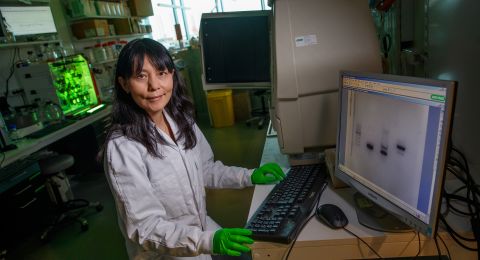
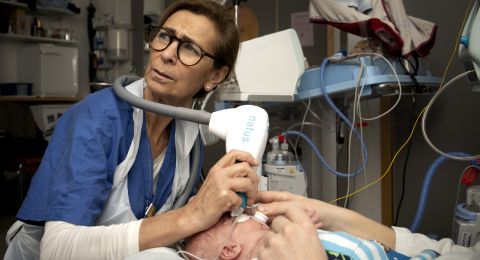
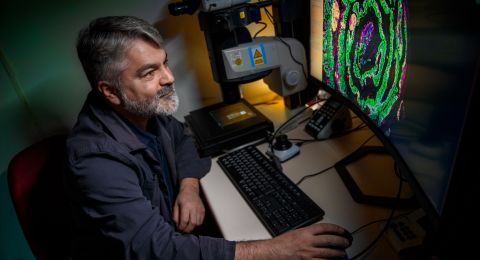
What role does the signaling substance NO‑ferroheme play in the process whereby our vessels dilate and blood pressure falls? This is one of the questions that Jon Lundberg and his research colleagues at Karolinska Institutet are addressing. Their goal is to contribute to improved treatments for cardiovascular disease.
Project Grant 2024
Novel Nitric Oxide Signaling Modalities for Cardiovascular Therapeutics
Principal Investigator:
Professor Jon Lundberg
Co-investigators:
Karolinska Institutet
John Pernow
Host Institution:
Karolinska Institutet
Grant:
SEK 31 million over five years
Almost thirty years ago, three American researchers were awarded the Nobel Prize for their discovery that nitric oxide gas functions as a signaling molecule in the cardiovascular system.
“Before that, nitric oxide was mostly associated with pollutants rather than the regulation of blood flow or control of blood pressure,” says Lundberg, who is a professor of pharmacology.
Together with his research team at Karolinska Institutet (KI), he is now challenging the Nobel laureates’ discovery that nitric oxide signals freely.
The KI researchers’ hypothesis is that nitric oxide (NO) instead binds to the iron in a free heme group – a group without protein – and forms a new signaling substance, NO‑ferroheme. The new substance is a more stable compound than the more volatile nitric oxide, which is easily destroyed in the blood or on its way from one cell to another.
The hypothesis was formulated in 2017 by Lundberg’s colleague Andrei Kleschyov and forms the basis of the research that Lundberg and his team at Karolinska Institutet are currently conducting with funding from Knut and Alice Wallenberg Foundation.
Diver in a shark cage
To illustrate his research, Lundberg picks up a sheet of paper with a sketch of a diver in a shark cage. He uses this image to explain the strength of NO‑ferroheme. The nitric oxide is bound and enclosed within the free heme group, so it is protected from destruction – like a diver in a shark cage.
“What we want to investigate is how endogenous NO‑ferroheme is formed, where in the body it exists, and exactly how it signals,” he says.
The goal is that the research will lead to new and improved treatments for cardiovascular disease and type 2 diabetes.
One of several techniques used in the lab is electron paramagnetic resonance (EPR), which enables the researchers to measure substances with unpaired electrons, such as NO‑ferroheme.
Many of the experiments are conducted on mice and rats. One finding is that NO‑ferroheme helps to widen the animals’ blood vessels, improving blood flow. Control experiments have also shown that NO‑ferroheme directly activates the enzyme guanylyl cyclase.
“This means that NO‑ferroheme itself can be regarded as a signaling substance,” says Lundberg.
Interaction between red blood cells and nitrate
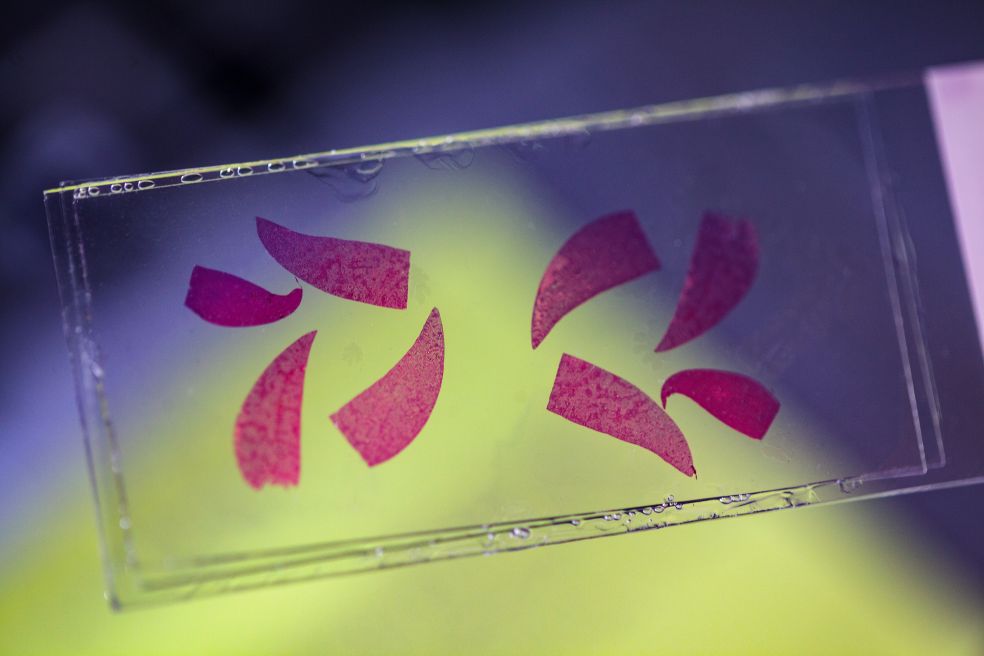
Another focal point is the interaction between red blood cells and nitrate, a substance found in vegetables such as beetroot, spinach and fennel.
When we eat vegetables or drink beetroot juice, the body absorbs the nitrate, and most of it eventually ends up in the salivary glands and is secreted into saliva.
Bacteria in the mouth convert nitrate into nitrite, which is then converted into nitric oxide in the body, resulting in dilated blood vessels and improved blood flow. No oxygen is required to form nitric oxide from nitrate, unlike the nitric oxide that the body forms via NO synthase.
It has also been shown that nitrate intake can stimulate red blood cells to release a substance protecting the heart when they are exposed to oxygen deficiency. This could be of great importance during a heart attack, for instance.
“We didn’t think it was possible for nitrate to form NO‑ferroheme inside red blood cells and then release a substance protecting tissue. But we were wrong. Being proved wrong is one of my favorite things about being a researcher,” says Lundberg.
Lundberg and his team have also discovered that nitrate reduces the muscles’ oxygen consumption during physical activity so that the same type of work can be performed with less oxygen. Athletes worldwide now use nitrate as a performance enhancer.
Small research teams most effective
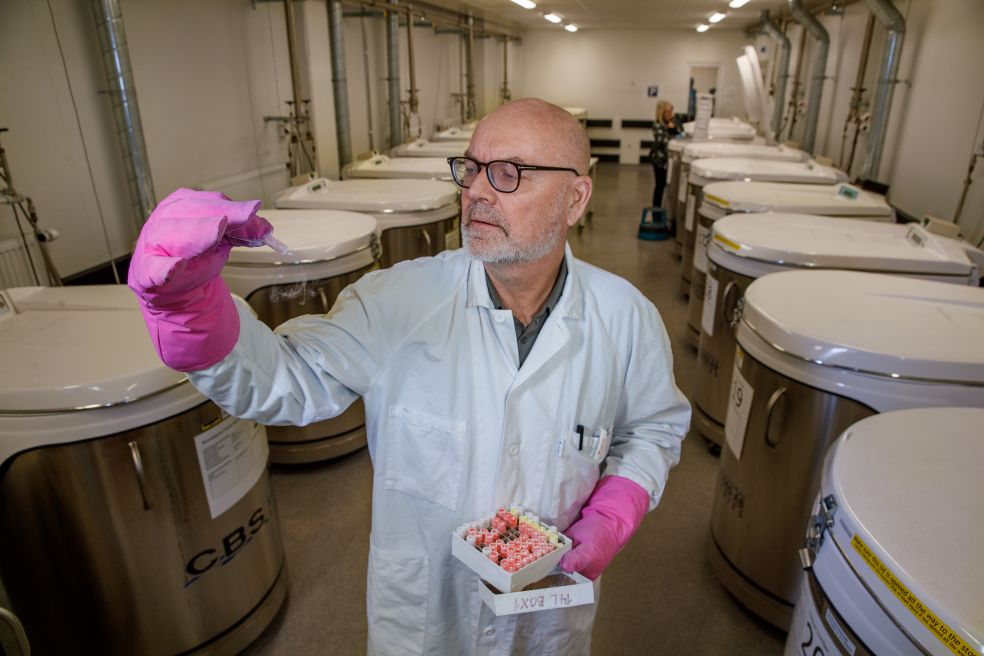
His research team consists of twelve people plus three professors who share overall responsibility. A perfect number, according to Lundberg. His experience is that small research teams are by far the most effective.
Cardiologist John Pernow heads the second team in the project, consisting of eight people. Their task is to find ways to stimulate the release of nitric oxide from red blood cells.
The team led by Lundberg has also found a new line of research. It concerns the ability of gut bacteria to form protective chemical compounds with the help of nitrate and iron in the diet.
The researchers fed mice a combination of nitrate and non‑heme iron – iron found in plant‑based foods – and made an interesting discovery. The combination has been shown to increase levels of another biologically active nitric oxide compound with protective effects on the cardiovascular system. These compounds are not formed in mice where bacteria are entirely absent.
In a follow‑up study, the researchers want to determine whether the intake of nitrate‑rich vegetables and nuts, which contain iron, generates measurable levels of protective chemical compounds in humans as well.
“What we have seen in mice is nothing short of revolutionary. We hope that the discovery will ultimately help prevent the development of high blood pressure, fatty liver, diabetes and other conditions,” says Lundberg.
Text Ylva Carlsson
Translation Maxwell Arding
Photo Magnus Bergström