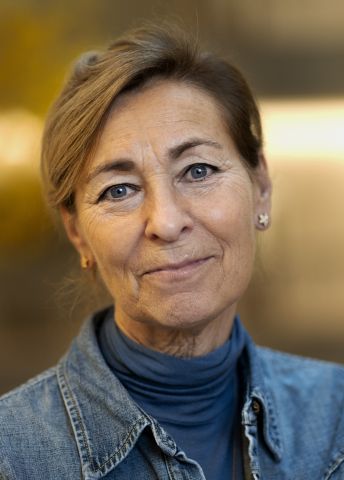
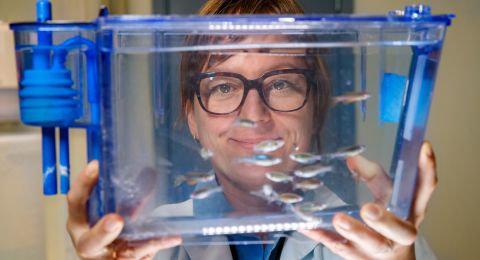
Ann Hellström is working to make a difference for our very youngest survivors: children born after only just over half of the normal term of a pregnancy. As a Wallenberg Clinical Scholar, she will further develop her groundbreaking research on severe diseases affecting these children and improve their prospects for optimal development.
Ann Hellström
Senior Consultant and Professor of Pediatric Ophthalmology
Wallenberg Clinical Scholar, grant extended 2025
Institution:
University of Gothenburg
Research field:
Eye and brain damage in prematurely born children
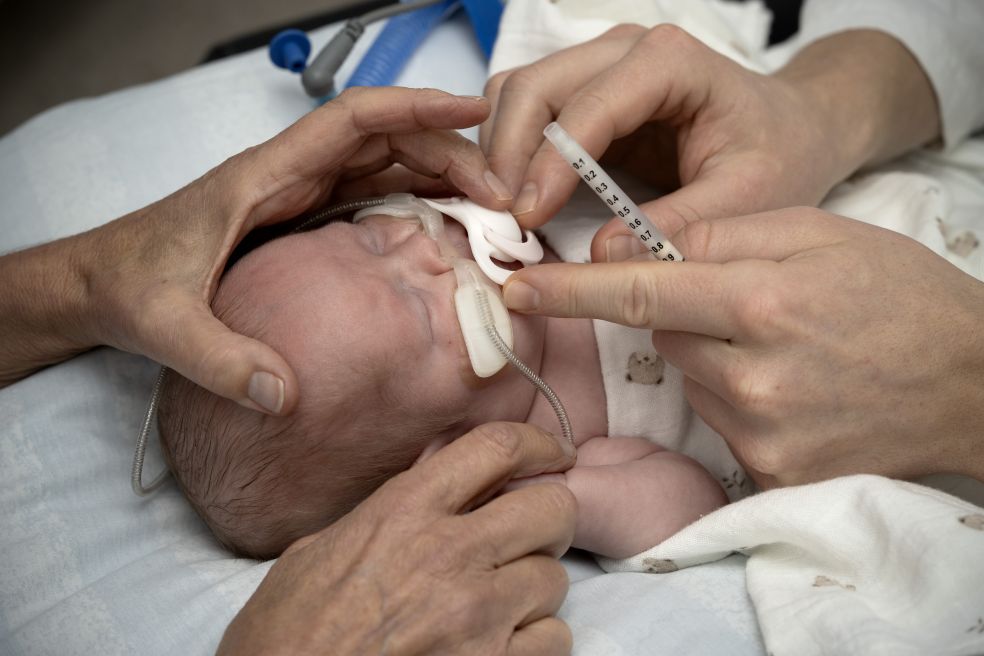
Medical advances have enabled us to save more and more children who leave the inutero environment far too early, even those born in gestational week 22. But life is tough for these survivors. The risk of infection is high; they are susceptible to many diseases, the metabolic demand is higher than what they can enterally achieve and their early life outside the womb is full of challenges.
“Noise, light, stimuli – everything is painful for these infants. Many of them have to be intubated and placed on ventilators, and they are subjected to a large number of tests. They face many challenges,” says Hellström.
Hellström is a pediatric ophthalmologist by training. For more than 30 years, she has conducted research and clinical work to improve the lives of children born very prematurely. One of her areas of focus has been a severe eye disease called ROP, which affects many extremely preterm infants. In 2021 her research team presented a breakthrough study showing that the risk of children developing ROP was halved when they received a combined supplement of fatty acids. Since then, the United States and several neonatal sites in Europe have introduced the supplement, and Sweden has now decided likewise.
“It’s a wonderful feeling. We’re now working to further optimize the composition of the fatty acids,” she says.
Umbilical cord blood boosts children’s resilience
Another problem for preterm born babies can be that blood vessel growth in the retina does not develop as it should. Those most severely affected may need to be treated with laser therapy or by having a substance injected into their eyes, but these procedures are complex and risky.
Hellström recently conducted a national randomized clinical trial examining whether an eyedrop of cortisone can improve early retinal development and reduce the risk of these infants requiring difficult treatment.
“The results so far give us cause for hope. This is something many people have been waiting for and it could be of great importance for children and for healthcare,” she says.
Numerous blood samples have to be taken from preterm newborns during their early stage of life to monitor disease development. This reduces their blood volume, negatively affecting them and increasing the risk of illness. Replacing lost blood with blood from adults does not work well because the fetal blood of premature infants has a unique composition that is very different from adult blood.
Hellström has long focused on this challenge, aiming both to reduce the amount of blood drawn from infants and to supply them with red blood cells from umbilical cord blood. Over the past five years, her research team has been collaborating with the Cord Blood Bank in Gothenburg, where a store of donated umbilical cord blood has been established.
I am curious, pragmatic, and well organized. If there is an opportunity to improve things for children, I want to be involved and be of help. That is my great driving force.
“We are just about to implement this fantastic initiative, in which vital red blood cells are preserved instead of simply being discarded. This could increase the resistance of preterm newborns to many diseases they may face, such as intestinal disorders, lung diseases and ROP,” she says.
Examining the unique content of breast milk
Another line of research concerns the powerhouses of the cells – the mitochondria – which are heavily stressed in extremely preterm newborns. The task of mitochondria is to convert energy in the body, and the research team has discovered that the first two weeks of a child’s life are crucial if this vital function is to be prevented from collapsing. The key is to strengthen the mitochondria with nutrition – and the very best nutritional content is found in breast milk.
“A mother’s own breast milk is tailored to the child’s genetics and environment and is by far the best medicine available in the neonatal ward. But it’s often difficult for mothers of premature infants to start producing breast milk. Support and targeted efforts are needed here. We also want to identify the most important constituents of breast milk, so we can use this knowledge to optimize the composition of donated milk, for instance,” she says.
In another study Hellström is mapping how mothers of extremely premature infants are coping and what part this plays in their children’s development.
“There hasn’t been much research into the link between the mother’s health and the child’s health status and illness. Perhaps a survey of this kind could improve healthcare interventions or help us prevent extremely premature births,” she says.
Good to be able to provide support
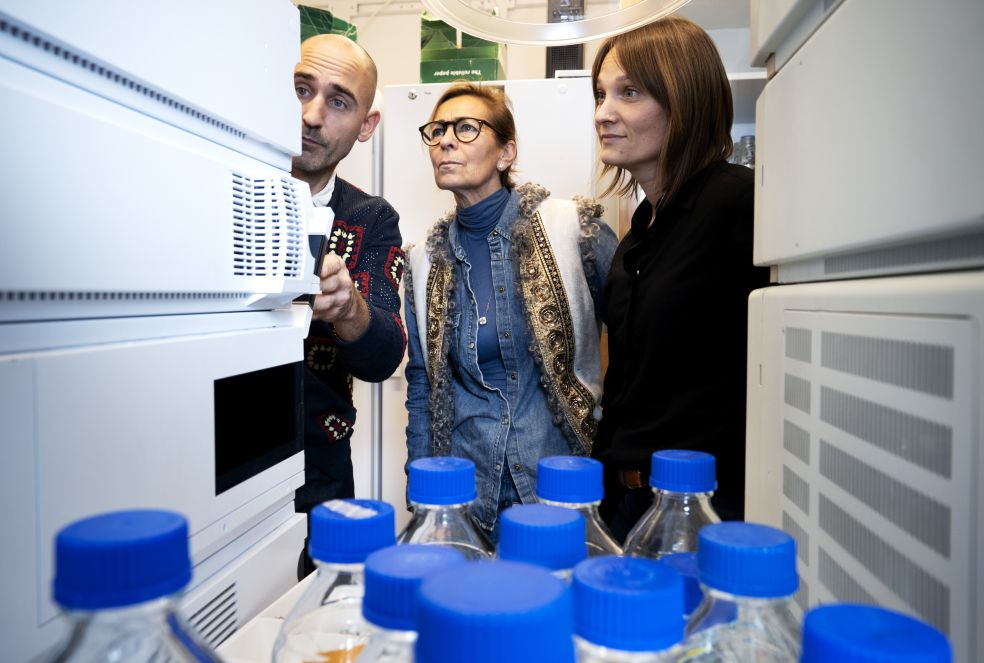
Hellström speaks warmly of the researchers she collaborates with, calling them “her second family.” In addition to fruitful collaboration, she very much enjoys the combination of research and clinical work.
“So much is happening in this field. It’s difficult to remain at the forefront of research without knowing what’s going on in the neonatal ward.”
Having a preterm born child is stressful, and Hellström meets many parents in difficult situations with sick children. Yet she rarely finds her work burdensome.
“I’m glad to be able to provide support and help parents get through the very hardest period. It’s comforting to be able to say: ‘It will get better,’ because in the vast majority of cases, it does,” she says.
Text Ulrika Ernström
Translation Maxwell Arding
Photo:Johan Wingborg