WISSH is a unique initiative to strengthen research in the social sciences and humanities in Sweden. Its goal is to make a substantial contribution to building the expertise essential for tomorrow’s knowledge-based society.
Wallenberg Initiative for Social Sciences and Humanities, WISSH
A national initiative to strengthen research in the social sciences and humanities.
The program includes:
- a graduate school for 275 doctoral students
- a postdoctoral program for 100 postdoctoral researchers
- approximately 50 career-development positions and
- a number of visiting professorships
Grant in SEK:
2.5 billion until 2039
The three largest Wallenberg Foundations are allocating a total of SEK 2.5 billion through 2039 to the Wallenberg Initiative for Social Sciences and Humanities, WISSH.
Research has long focused on technological development and advances in the natural sciences and medicine as cornerstones of scientific and societal progress. Yet the explosive development of AI, in particular, demonstrates the need for other perspectives.
We are in the midst of a technological transformation unfolding faster than anything we have seen before. AI is changing how we work, how we learn, how we access information, and how democracy functions. Much of this is positive, but questions about the implications for people and society are not primarily technical. Technology itself cannot answer questions about how we want to live, govern, and understand ourselves. If people are to remain at the center of this technological transformation, we need a deep understanding of people and society.
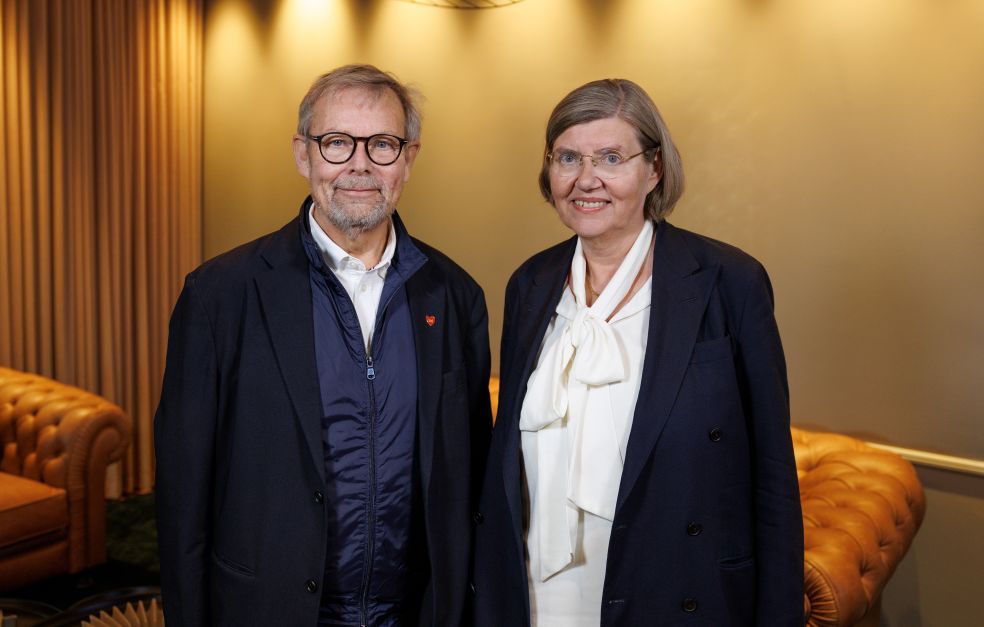
“It is becoming increasingly clear that knowledge in the humanities and social sciences plays a crucial role in addressing society’s major challenges and developing sustainable solutions for the future. At the same time, these fields have been underfunded for many years – an imbalance the Wallenberg Foundations now aim to address through a strategic investment in this area,” says Peter Wallenberg Jr, chair of Knut and Alice Wallenberg Foundation and Marianne and Marcus Wallenberg Foundation.
Building a strong knowledge base
The national program includes a graduate school for 275 doctoral students, a postdoctoral program for 100 postdoctoral researchers, approximately 50 career-development positions, and a number of visiting professorships.
“The WISSH program will make it possible to establish new, strong knowledge environments where excellent research can be conducted in a broad, multidisciplinary context, in close collaboration with the natural sciences, technology, and medicine, and in dialogue with business, the public sector, and civil society,” says Astrid Söderbergh Widding, Executive Director of Marianne and Marcus Wallenberg Foundation and Marcus and Amalia Wallenberg Foundation.
The program has largely taken shape in response to needs identified in discussions that Astrid Söderbergh Widding and other representatives of the foundations have held with university leaders during visits to higher education institutions across Sweden.
“There is clearly a substantial and immediate need for an initiative like this. The pipeline of doctoral students, particularly in the humanities but also in many social science disciplines, is alarmingly small.
It is a unique initiative within fields that have been underfunded for many years, an imbalance the Wallenberg Foundations are now addressing.
Astrid Söderbergh Widding emphasizes that although perspectives from the humanities and social sciences are the program’s primary focus, researchers in these fields also need a deeper understanding of medicine, the natural sciences, and technology.
“This is evident in the increasingly complex interplay between people and nature, technology and society. Of course, the reverse is also true: researchers in medicine, the natural sciences, and technology also need greater knowledge of the humanities and social sciences. That is why strong research environments are important across all fields.”
Three foundations – one program
The Wallenberg Initiative for Social Sciences and Humanities, WISSH, is funded by Marianne and Marcus Wallenberg Foundation, which primarily supports the social sciences; Marcus and Amalia Wallenberg Foundation, which primarily supports the humanities; and Knut and Alice Wallenberg Foundation, which primarily supports the natural sciences, medicine, and technology — the three largest Wallenberg Foundations.
In addition to the WISSH program, the three foundations will continue their existing funding programs.
“This is a long-term initiative that will complement the regular calls for project proposals in the social sciences and humanities. Individual grants for researchers in these fields under the Wallenberg Academy Fellows program will also be increased,” says Astrid Söderbergh Widding.
The program director of WISSH will be Christofer Edling, professor of sociology and program director of the foundations’ WASP-HS research program. WASP-HS explores the development of new technology and its implications for us as individuals and for society as a whole.
"WISSH is an ambitious initiative in the future of Swedish research in the humanities and social sciences. With its long-term commitment, scale, and close ties to the Wallenberg Foundations’ other research programs and networks, the program will create opportunities to build strong research environments. It will also give early-career researchers in these fields access to opportunities that go beyond what individual universities or disciplines can offer on their own. I am delighted to help shape this program from the very beginning."
Text Carina Dahlberg
Image Magnus Bergström