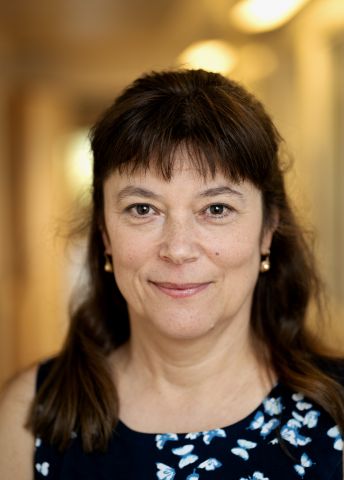
Wallenberg Scholar Tünde Fülöp studies runaway electrons, unimaginable forces, and spectacular phenomena – what she calls “the beauty of plasma physics.” Her goal is to open doors to the energy source of the future – fusion, and also to improve medical applications such as radiation therapy for cancer.
Tünde Fülöp
Professor of Plasma Physics
Wallenberg Scholar
Institution:
Chalmers University of Technology
Research field:
Plasma physics
Plasma is a strange, yet a powerful phase of matter. Often called “the fourth state of matter” after solid, liquid and gas, it occurs when matter is fully ionized and filled with free, charged particles.
Tünde Fülöp often uses analogies from human and animal behavior to describe the strange collective phenomena that can occur in the interaction between the numerous charged particles in plasma.
“The particles are negatively or positively charged and create strong electromagnetic forces by constantly interacting with each other. It’s a very exciting phenomenon – as if everyone suddenly believed in something and began acting in concert. Like a crowd that suddenly parts, or a huge shoal of fish moving in unison,” she says.
On Earth, plasma exists in lightning and the aurora borealis and australis, and in space almost everywhere, such as in stars and the solar wind. But plasma can also be artificially created when gas is exposed to strong forces, such as powerful electric fields or extreme heat, causing electrons to be torn away from their atomic nuclei.
“The phenomena I study are beautiful and spectacular. But above all, I am motivated by the applications: enabling technology that can solve the world’s energy challenges and pave the way for important medical advances,” she says.
Stopping runaway electrons
Over the next few years, Tünde Fülöp will focus on two areas of plasma physics. The first concerns magnetic fusion plasmas, which are essential for realizing fusion. In a fusion reactor, where the fuel consists of plasma at around 100 million degrees Celsius, it is crucial to steer and control electrons that attain extremely high energy. If something goes wrong, a runaway beam of electrons may form, like an uncontrollable welding flame, capable of causing severe damage to the reactor.
There are ways of trying to stop runaway electrons. One possibility is to inject material in the form of pellets into the plasma to slow the electrons down. Another is to use special perturbation coils with magnetic fields that cause the electrons to be transported out from the plasma. But both methods are complicated and practically difficult. This is where Tünde Fülöp’s research comes in.
“We want to develop simulation tools, available to everyone, that can be used to optimize the methods and find the best ways to stop runaway electrons. If we can pave the way for experiments capable of improving our understanding and control of these processes, it will be an important step in the development of fusion,” she says.
Creating stable particle acceleration
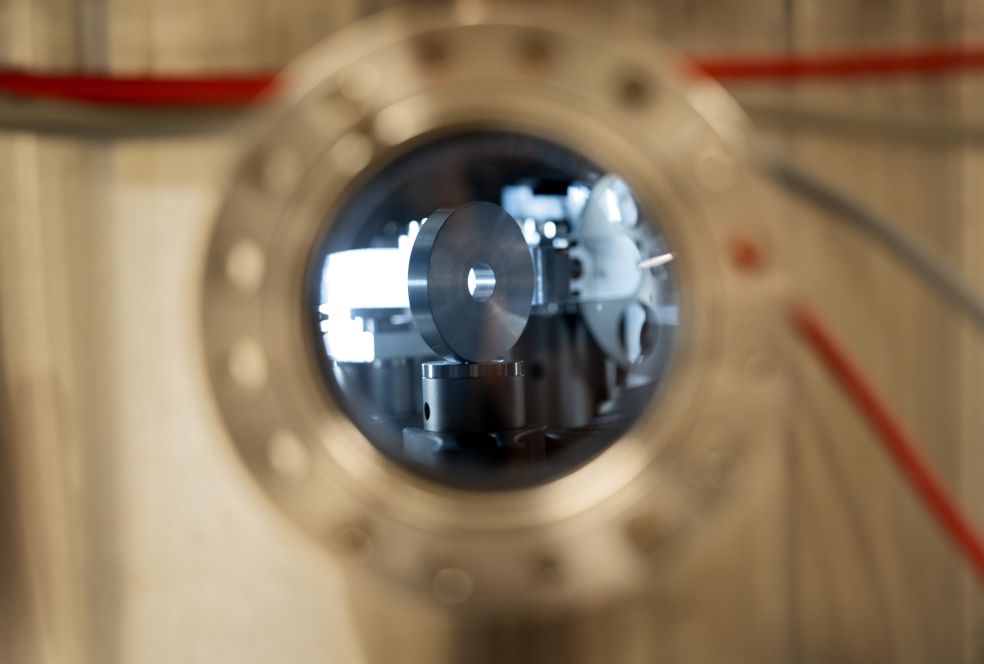
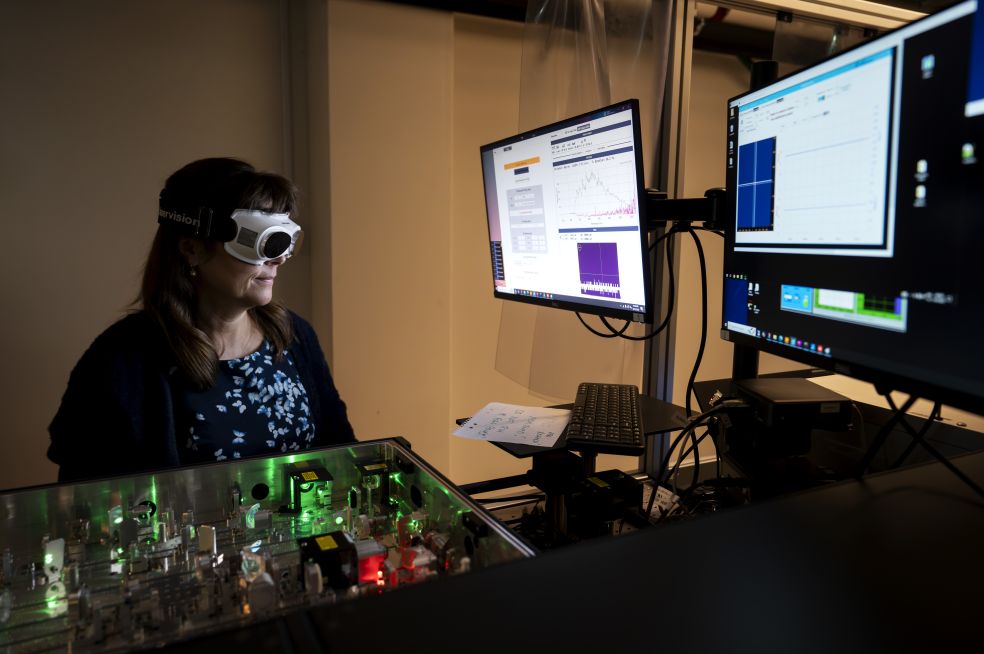
Laser-produced plasma is the second focus area for Tünde Fülöp. It is an important field of particle acceleration, in which charged particles are accelerated to high energies using electric fields. These strong fields are created using high-intensity lasers of almost unimaginable power.
The phenomena I study are beautiful and spectacular. But above all, I am motivated by the applications.
“The laser beam is so incredibly powerful that it can be compared to focusing all the sunlight hitting the earth on a single grain of sand,” she says.
The electron beams produced have many potential applications, such as radiation sources for treating cancers, X-rays for imaging parts of the body, or for examining the properties of materials. But efficiency and stability in particle acceleration must be improved, and this is what Tünde Fülöp and her team aim to do.
“The methods must be more reliable and easier to use than they are at present. We want to develop a toolbox to optimize and improve particle acceleration processes. In a few years, I hope we will have created the means to generate and control extremely high-energy beams in a more precise way,” she says.
Every day of research is interesting
Tünde Fülöp was born in Romania, the daughter of two teachers. She grew up close to the school environment, so the academic world seemed both appealing and natural. Her family moved to Sweden when she was a teenager, and it was there that her interest in physics took off – thanks to a high school competition that served as a qualifying round for the International Physics Olympiad.
“Suddenly, when we had to answer all the exciting questions in the competition, physics became so real, so interesting. After high school, I chose engineering physics, and after an internship in the United States I realized I wanted to pursue a PhD to continue working in the field.”
She finds every day as a researcher to be interesting in one way or another. Solving problems step by step is a driving force, as is working with colleagues, and being inspired by them, particularly younger researchers.
“I am highly motivated by working closely with junior researchers, discussing research questions together, and trying to find solutions. I enjoy stepping outside my comfort zone and working with people who are skilled – perhaps more skilled than I am. It’s inspiring,” she says.
Text Ulrika Ernström
Translation Maxwell Arding
Photo Johan Wingborg